
Table of Contents
This post may contain affiliate links, meaning we may earn a small commission at no extra cost to you. We only recommend products we trust, and your support helps us continue creating helpful content.
If your emails aren’t getting opened, nothing else matters. Finding the right email subject line formula is the difference between a dead ‘Unread’ folder and a high-converting business.
You could have the best content, the perfect offer, or a high-converting welcome email sequence—but if no one clicks that subject line, your hard work dies in the “Unread” folder.
In 2026, the average person receives over 120 emails a day. Their brain has developed a “Digital Triage” system. In under 1.5 seconds, they decide if your email is a Friend (Open), a Foe (Spam), or a Time-Waster (Delete).
In this guide, you’ll discover 25 proven email subject line formulas designed to bypass the mental filters of 2026, drive massive engagement, and turn your list into a high-performance asset.
The “Digital Doorman”: Why Subject Lines are the Ultimate Gatekeeper
Think of your subject line as the Digital Doorman standing outside your content. In a crowded 2026 inbox, your reader is walking a busy street and won’t stop for everyone.
If your doorman looks like a pushy salesman in a cheap suit—using ALL CAPS or clickbait—the reader keeps walking. Their internal spam filter is on high alert. However, if he looks like a trusted friend with a secret, they step inside.
The 1.5-Second Rule: Your doorman has exactly 1.5 seconds to make a case. By using a proven email subject line formula, you aren’t shouting for attention; you’re offering a curated invitation. When the doorman’s “look” aligns with the reader’s current problem, the door opens every time.
The Science of the “Micro-Commitment”
Email marketing is a chain of small “Yeses.”
- Yes #1: I recognize the sender.
- Yes #2: The subject line is relevant.
- Yes #3: I’m going to click.
If you fail at Yes #2, your monetization strategy is over before it begins. Even a 5% increase in your open rate can lead to a 50% increase in revenue over time. This is the “Passive Math” that separates hobbyists from pros who know how to build an email list that actually pays.
The 2026 “Snippet” Power-Up (Don’t Ignore the Gray Text)
Before we dive into the formulas, we must address the Pre-header (or Snippet Text). This is the short line of text that follows your subject line in most email clients.
In 2026, the Subject Line and the Snippet work like a Headline and a Sub-headline. * The Subject Line creates the “Hook.”
- The Snippet provides the “Context.”
The Strategy: If your subject line is a question (“Are you making this mistake?”), your snippet should provide the stakes (“This one error cost me $400 in ads this month…”). If you leave your snippet to “view this email in browser,” you are wasting 50% of your prime digital real estate. This is a vital component of email marketing automation.
The 3 Pillars of a High-Open Email Subject Line Formula
Most high-performing subject lines in 2026 rely on one of three psychological triggers:
1. The Curiosity Gap
This is the “Information Gap” theory. You give the reader enough info to be interested, but not enough to satisfy them. They must click to close the loop in their brain.
- Example: “I almost deleted this…”
2. Tactical Clarity (The “What’s In It For Me” Rule)
Sometimes, “clever” fails. In a busy morning, people want to know exactly what they are getting.
- Example: “7 templates for your next blog post [Inside]”
3. The Pattern Interrupt
When every other email in the inbox uses Title Case and Emojis, a plain, lowercase subject line stands out. It looks like a personal note from a friend.
- Example: “quick question”
Cluster 1: Curiosity-Based Email Subject Line Formula

In 2026, the human brain is wired to “close the loop.” If you give them 90% of a story, they will click just to get the final 10%. This is the heart of email marketing for beginners.
1. The “Open Loop” Teaser
- Formula: [Personal Action] + [Vague Outcome]
- 2026 Example: “I almost deleted this email…”
- Why it works: It triggers a “Wait, why?” response. If the creator almost deleted it, it must be controversial or surprisingly valuable.
2. The “Pattern Interrupt” Question
- Formula: Are you [Common Action] + [Unexpected Negative]?
- 2026 Example: “Are you working too hard to grow your list?”
- The MSC Twist: This challenges the “hustle” culture. It implies there is a “Lazy” (read: efficient) way to get results.
3. The “Secret” Insider
- Formula: The [Niche] secret [Authority Figure] won’t tell you.
- 2026 Example: The SEO secret Google doesn’t want you to know.
- Why it works: It creates an “Us vs. Them” narrative. People love feeling like they have an unfair advantage.
4. The “Unexpected” Connection
- Formula: What [Random Object] taught me about [Niche Topic].
- 2026 Example: What a cup of coffee taught me about email open rates.
Cluster 2: The ROI & Benefit-Driven Formula
These are the workhorses of your welcome email sequence. They promise a specific, tangible result. In a busy inbox, “Clarity beats Clever” 80% of the time.
5. The “Numerical” Authority
- Formula: [Number] [Noun] to [Desired Result].
- 2026 Example: 7 simple templates to double your clicks.
- The MSC Twist: Numbers stand out visually among a sea of text. They promise “Scannability,” which is the #1 requirement for mobile readers.
6. The “How-To” Professional
- Formula: How to [Benefit] without [Pain Point].
- 2026 Example: How to build an email list without spending a dime on ads.
- Why it works: It removes the biggest barrier to entry (the “Pain Point”) immediately.
7. The “Quick Win” Fix
- Formula: A [Time] fix for your [Problem].
- 2026 Example: A 2-minute fix for your low open rates.
8. The “Results-First” Claim
- Formula: How I got [Specific Result] in [Specific Time].
- 2026 Example: How I gained 400 subscribers in 48 hours.
Cluster 3: The “Fear of Missing Out” (Urgency & Scarcity)
Use these sparingly. If every email is a “Last Chance,” your audience will develop Urgency Fatigue. But when used correctly, these are the highest-converting subject lines in email marketing automation.
9. The “Countdown” Closer
- Formula: [Time Left] until [Offer] expires.
- 2026 Example: 4 hours left to grab the “Atomic” bundle.
10. The “Social Proof” Pressure
- Formula: [Number] people are already [Action]. Are you?
- 2026 Example: 5,000 bloggers are using this tool—are you?
- The MSC Twist: This taps into our tribal instinct. No one wants to be the last person to find out about a “game-changer.”
11. The “Negative Outcome” Warning
- Formula: Stop [Action] before you lose [Benefit].
- 2026 Example: Stop sending emails before you read this.
Cluster 4: The “Evidence of Humanity” (Story & Connection)

People don’t subscribe to “Brands” anymore; they subscribe to guides. These formulas move your subscriber from “Reader” to “Friend.”
12. The “Flaws-First” Admission
- Formula: I messed up [Topic] so you don’t have to.
- 2026 Example: I accidentally deleted my entire email list.
- The MSC Twist: Vulnerability is the ultimate pattern interrupt. When everyone else is pretending to be perfect, your mistake makes you trustworthy.
13. The “Relatable Hero” Journey
- Formula: From [Pain Point] to [Specific Result].
- 2026 Example: From 0 to 500 subscribers in 30 days.
- Why it works: It maps out the exact transformation your audience wants. This is a staple for a welcome email sequence.
14. The “Inside Look” (Behind the Scenes)
- Formula: A look behind the curtain of [Process].
- 2026 Example: What my home office actually looks like today.
15. The “I Almost Quit” Hook
- Formula: I almost quit [Niche] until this happened.
- 2026 Example: I almost quit blogging until I found this tool.
16. The “Unexpected” Lesson
- Formula: [Common Object] + [Uncommon Advice].
- 2026 Example: What a pizza delivery taught me about customer service.
Cluster 5: The “Stealth” Tactic (The 2026 Naked Subject Line)
This is the most dominant trend of 2026. These subject lines are intentionally “under-designed” to look like a personal message from a friend or a colleague.
17. The “Quick Question” (Lowercase)
- Formula: quick question for you
- 2026 Example: hey, quick question
- The MSC Twist: No capital letters. No emojis. It looks like a text message in an inbox full of “SHOUTING HEADLINES.”
18. The “One-Word” Intrigue
- Formula: [Noun]
- 2026 Example: checklist?
- Why it works: It’s so minimalist that the brain can’t help but wonder what the context is.
19. The “Forward” (Re:) Hack
- Formula: Re: [Topic from previous email]
- 2026 Example: Re: our call on Tuesday
- Warning: Use this very carefully. It can feel deceptive if there was no previous conversation. Use it only in your email marketing automation follow-ups.
20. The “Naked” Link
- Formula: [Topic] + [Link Indicator]
- 2026 Example: that email template you asked for (link)
Cluster 6: The “Problem/Solution” Workhorses
These speak directly to the “Pain Points” your audience is feeling right now.
21. The “Frustration” Callout
- Formula: Tired of [Problem]?
- 2026 Example: Tired of zero clicks on your emails?
22. The “Stop Doing This” Warning
- Formula: Stop [Common Mistake] today.
- 2026 Example: Stop using generic subject lines.
23. The “Easier Way” Offer
- Formula: A much easier way to [Result].
- 2026 Example: A much easier way to build an email list.
24. The “Contrarian” Claim
- Formula: Why [Common Advice] is wrong.
- 2026 Example: Why “Consistency” is killing your blog.
25. The “Personalized” Call
- Formula: [Name], I made this for you.
- 2026 Example: Sarah, I made this checklist for you.
How to Test Your Email Subject Line Formula
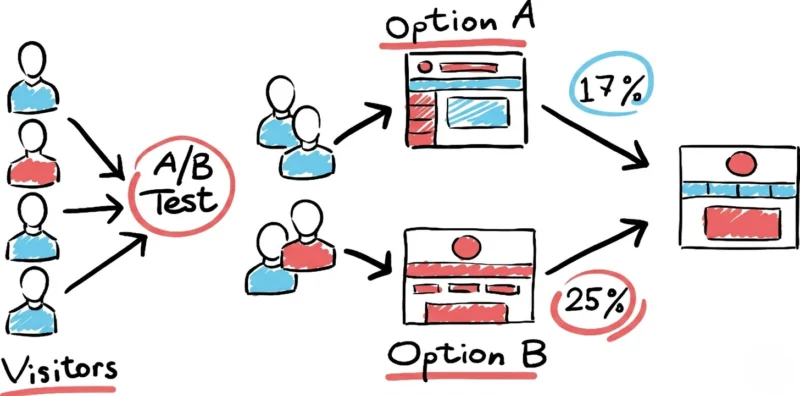
Most bloggers send an email and pray. The “Middle-Class Side-Hustler” sends an email and learns. Most modern email marketing tools allow you to run A/B split tests to find your winning email subject line formula. To see exactly how to set up your first experiment, HubSpot’s technical guide to A/B testing offers the specific steps needed to automate the winning version.
What to Test in 2026:
- Curiosity vs. Clarity: Test “I have a secret…” against “7 ways to save $100.” You’ll be surprised how often “Clarity” wins when people are busy.
- The “Emoji” Factor: Test a subject line with one relevant emoji vs. a “Naked” plain-text version. In some niches, emojis increase opens; in others, they trigger the “Spam” alarm.
- Personalization: Test “[Name], check this out” vs. “Check this out.” * Length: Test a 3-word “Punchy” subject line against a descriptive 10-word one.
The Strategy: Only test one variable at a time. If you change the subject line and the sender name, you won’t know which one caused the spike in opens.
The “Silent Killer”: Deliverability vs. Open Rates
You can have the greatest subject line in history, but it won’t matter if it lands in the Spam folder. In 2026, “Spam Triggers” have evolved. Professional creators stay ahead of these filters by following the Marketing Email Best Practices from Spamhaus to ensure their messages hit the primary inbox.
1. Avoid the “Shouting” Words
Avoid using all caps (e.g., “OPEN NOW”) or excessive exclamation points (!!!). These are the digital equivalent of a shady car salesman.
2. The “Hard-Sell” Filter
Words like “Free,” “Cash,” “Weight Loss,” or “Urgent” can sometimes trigger AI filters. Instead of “FREE,” try “Complimentary” or “On the house.” Instead of “Urgent,” try “Time-sensitive” or “Before Tuesday.” This is a key lesson in email marketing for beginners.
3. The “Subscriber Health” Check
If people stop opening your emails, Gmail thinks you are sending “Gray-mail” (content they didn’t really want). Every 3–6 months, you should perform a “List Scrub” and remove anyone who hasn’t opened an email in 90 days. It sounds scary, but it actually increases your open rates and sender reputation.
Your Subject Line is the “First Yes”

Remember, your subject line isn’t meant to sell your product, sign people up for a webinar, or change their lives. Its only job is to get them to open the email. It serves as the critical gatekeeper of your funnel; if this fails, your most valuable insights remain completely invisible to the reader.
Don’t overcomplicate it. Start with these 25 formulas, lean into the “Naked” trend for personal connection, and always provide a “Snippet” that adds context. In 2026, a well-crafted subject line is the difference between being a trusted voice and just more digital noise. When you master the art of the “Click,” you have mastered the art of attention—the only asset that truly compounds.
Start today:
- Pick one “Curiosity Gap” formula for your next broadcast.
- A/B test it against a “Direct Clarity” formula.
- Watch the data and iterate.
Your “Digital Security Fund” depends on your ability to open that door. Now, go get those clicks.
Which of these 25 formulas are you going to test on your very next broadcast? Are you feeling the “Naked” lowercase trend, or are you sticking with a “Results-First” claim? Drop your subject line ideas in the comments and let’s critique them together!
