
Table of Contents
This post contains affiliate links. If you click through and buy something, I may earn a small commission — at no extra cost to you. I only recommend tools I’ve actually used or thoroughly researched.
Working from home sounds like a dream until you’re three hours into a laundry-fueled distraction spiral at 2pm. Remote work isn’t going anywhere in 2026, and neither are its very particular ways of eating your whole day if you let it.
Without an office to separate “work” from “everything else,” the two blur together fast. Family walks in, the dishes pile up, and suddenly it’s 4pm and you’ve answered six emails and folded a basket of washing.
I write this blog from home myself, so most of what’s below is trial and error from my own desk. Here are ten things that actually help.
10 Tips to Stay Productive When Working From Home
These are the habits that actually make a difference, not just the ones that sound good on a list. Use what fits, skip what doesn’t, and adjust as your setup changes.
1. Establish a Dedicated Professional Office Area
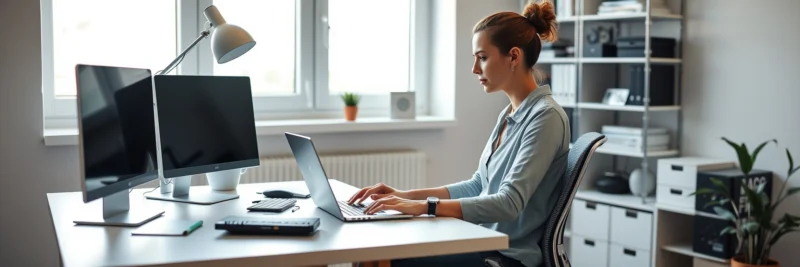
Working from the couch or answering emails from bed feels like freedom at first. It’s actually a productivity trap. Your brain already associates those spots with relaxing, so it’s an easy slide into scrolling, Netflix, or an accidental nap.
The kitchen table isn’t much better if you share your home. Every interruption resets your focus, and a task that should take twenty minutes turns into an hour of starting over.
A dedicated space, even a small one, does two jobs at once:
- The psychological cue: sitting down there tells your brain it’s work time, without any extra effort on your part.
- The physical boundary: it’s a visible signal to family or roommates that you’re on the clock and shouldn’t be interrupted unless it’s genuinely urgent.
It doesn’t need to be fancy. It just needs to be yours.
2. Tame the Chaos to Clear Your Mind
A cluttered desk costs you twice: the time spent hunting for a notebook or a receipt, and the quiet hum of “I should really clean this” sitting in the back of your mind while you’re trying to focus.
You don’t need a spotless desk. If you’re naturally messy, try an “end of day reset”: five minutes each evening to clear the day’s chaos, so tomorrow starts clean.
Pro tip: even a busy desk works fine if you at least clear the trash. Empty cups, wrappers, whatever’s piled up, and keep a simple filing system so anything important takes seconds to find, not minutes.
3. Take Control of Your Schedule (Before It Takes Control of You)
One of the best parts of working for yourself is choosing your own hours. Early riser or night owl, work when your brain is actually switched on.
Freedom only works with a bit of discipline behind it though. Once you’ve found your hours, protect them. Letting chores or hobbies creep into work time is the fastest way to lose a day.
Figure out your own rhythm:
- Batching: check email two or three times a day instead of constantly.
- Real-time: stay connected and handle things as they land.
Neither is more “correct.” Whatever keeps you moving is the right one.
4. Use To-Do Lists and Project Roadmaps
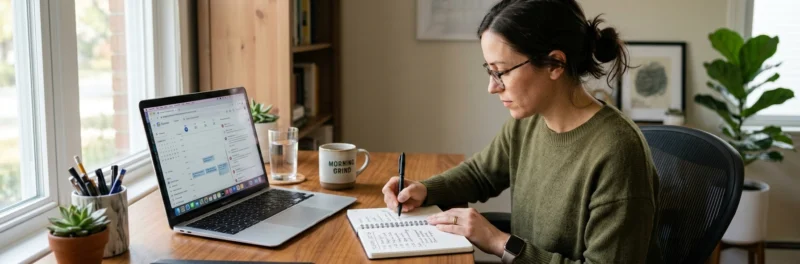
Without a plan, you end up just reacting to whatever pings loudest. A daily list keeps your actual priorities visible instead of whatever’s shouting for attention.
- Eat the frog: do your least favorite task first. Get it out of the way before it hangs over the rest of your day.
- The small win: there’s a real hit of satisfaction in crossing something off a list. It’s a small thing, but it’s genuine motivation to keep going.
Pair your daily list with a weekly or monthly one. Break bigger projects into smaller pieces, so progress is visible every day, not just at the finish line.
5. The Paradox of Productive Breaks
It sounds backwards, but breaks make you more productive, not less. Nobody, machines included, can hold sharp focus indefinitely.
A short break lowers stress and gets you back to the task with more in the tank. Ten minutes away from a hard problem often does more than another hour of pushing through it.
How to break well:
- Change the scenery: step outside for a few minutes if you feel a headache building. Fresh air and a short walk usually clear it faster than powering through.
- Make it productive: if sitting still isn’t working for you, use a break to wash a few dishes or start a load of laundry. It keeps you moving and chips away at the house at the same time.
- Watch the clock: try short breaks every hour (the Pomodoro approach) or a longer twenty-minute one every couple of hours. Keep it under thirty minutes, or it gets harder to switch back into work mode.
6. Ruthlessly Eliminate Digital and Physical Distractions
Between the doorbell, the chores, and anyone else in the house, distractions find you without trying. A dedicated space and a set schedule help, but the internet needs its own defense.
If a task doesn’t need you online, turn off the WiFi or put your phone in another room. “Just checking” a news site for two minutes has a habit of turning into forty.
- Use site blockers: apps like Freedom or Cold Turkey can lock you out of the usual suspects during focus blocks.
- The one-tab rule: keep a single tab open at a time. It feels restrictive at first, but it forces your attention to stay put.
7. Make Your Day Fun with a Reward System
Stuck on something you’re dreading? Turn it into a small game. Set a tiny reward for finishing a specific task you’ve been putting off.
- The reward: a proper coffee, ten minutes with a book, a quick browse online, whatever feels like a treat.
- The real payoff: often the biggest reward is just the relief of the task being done. That feeling alone is usually better than whatever you promised yourself.
8. Dress for the Job You Aspire to Have (Even at Home)
Staying in pajamas all day feels comfortable, but your brain reads sleepwear as a signal to wind down, not gear up.
You don’t need a suit. Just changing into “real” clothes is enough of a cue to tell your brain the workday has actually started.
- The morning routine: a shower, breakfast, and getting dressed properly help ease you into work mode before you sit down.
- Not just superficial: there’s a real link here, known as enclothed cognition, between what you wear and how you think. Dressing like you mean it tends to make you act like it too.
9. Prioritize Movement and Natural Light

Working from home tends to mean sitting more, which quietly drains your energy over a day. A bit of movement and daylight goes a long way.
- The morning walk: ten minutes outside before you start resets your body clock better than a second coffee.
- Move at lunch: a short walk or a quick home workout beats the afternoon slump far better than another cup of coffee.
- Mind the timing: skip intense exercise within a few hours of bed, it can make it harder to switch off for sleep.
10. Invest in a Standing Desk for Better Flow
A standing desk is a simple change that actually makes a difference. Moving between sitting and standing keeps blood flowing, keeps your muscles engaged, and helps clear the fog that sets in after hours in one position.
Can’t justify a full standing desk right now? A converter that sits on top of your existing desk does the same job for a lot less.
The Mayo Clinic notes that cutting down on sitting time can lower the risk of obesity and heart disease, on top of the day-to-day focus boost.
FAQ: Staying Productive at Home
Is it more effective to work in a single extended session or to take regular breaks?
Regular, structured breaks beat long “marathon” sessions. Your brain’s ability to hold sharp focus starts to fade after roughly 60 to 90 minutes. A system like the Pomodoro Technique refreshes your focus so you’re actually sharp when you’re working, instead of pushing through mental fatigue.
How can I manage family or roommates who frequently interrupt me?
Set clear visual and physical boundaries. Alongside a dedicated space, use a signal, a closed door or noise-canceling headphones, to show you’re in a focus block. Sitting down with your household to walk through your schedule so they know when you’re free and when you’re not makes a real difference too.
What is the best way to overcome procrastination on tedious tasks?
Eat the frog: tackle your least favorite task first thing. It removes the mental weight of that task hanging over you all day, and everything after it feels lighter by comparison.
Is it possible to be productive without a dedicated office room?
Yes. A separate room helps, but a “micro-office”, one specific desk or chair used only for work, does a similar job in a small apartment. The goal is building a mental link between that spot and focus, so stepping away actually feels like leaving work behind.
How do I maintain a work-life balance when my office is in my house?
Build a shutdown ritual. At the end of your hours, close the laptop, clear your desk, and maybe take a short walk to mimic a commute home. It helps your brain switch out of work mode so you can actually switch off, instead of feeling the itch to check email all evening.
Does the “Dress for Success” guideline still hold if I’m not having video calls?
Yes. Dressing well isn’t about who’s watching, it’s about how it makes you feel. It’s called enclothed cognition: putting on clothes that aren’t pajamas signals to your brain that relaxing time is over and it’s time to focus. A small habit, but a genuinely useful one.
Recommended Reading
- Work From Home Gigs: Flexible Ways to Earn
- How to Become a Virtual Assistant From Home
- 10 Best Sites for Remote Jobs 2026
- 20 Flexible Side Hustles to Make Money Online
Remote Productivity
Staying productive at home isn’t something you nail once and forget, it’s more of an ongoing tweak. Your setup, your habits, even your energy levels change, so the system that works this year might need adjusting next year too.
A dedicated space and knowing what actually motivates you go a long way toward making sure work doesn’t quietly eat into your downtime and your headspace.
Working from home gives you real freedom, but only if you’re honest with yourself about staying disciplined. Without some structure, it’s easy to lose the day to distractions, whether that’s the washing machine or your phone.
Try a few of these, keep what works, and drop what doesn’t. That’s really all a productivity system is: a bit of trial and error until you land on something that fits how you actually work.