
Table of Contents

This post contains affiliate links. If you click through and buy something, I may earn a small commission, at no extra cost to you. I only recommend tools I’ve actually used or thoroughly researched.
Knowing how to blog legally and ethically isn’t the most exciting part of running a blog, but ignoring it can have real consequences, from losing affiliate partnerships to facing regulatory action.
The good news: the rules aren’t complicated. Most bloggers can get everything in this post right in a single afternoon of setup. After that, it’s mostly habit, applying the right disclosures, respecting copyright, and treating your readers honestly.
Here’s what you actually need to know.
If you want to blog legally and ethically in 2026, you can’t rely on copied templates or guesswork. The rules have evolved, enforcement is tighter, and what used to “pass” as good enough can now cost you traffic, trust, or even your entire site.
How to Blog Legally and Ethically: 8 Rules That Matter
Rule 1: Disclose Affiliate Relationships, Always
If your blog contains affiliate links, links that earn you a commission when a reader clicks and buys, you are legally required to disclose this in the US (FTC rules), UK (ASA rules), and most other jurisdictions.
The disclosure needs to be:
- Clear, readers must be able to understand it before they engage with the affiliate content
- Prominent, not hidden at the bottom of the page in small text
- Specific, “this post contains affiliate links” is the standard wording
What I do on thesidehustler.blog: Every post that contains affiliate links opens with a disclosure statement before the first paragraph. Not buried in the footer, at the very top of the post, before any content the reader might act on.
The FTC’s guidance on endorsements and testimonials covers this in detail. The short version: if there’s a material connection between you and a brand (money, free products, affiliate commissions), your readers must know about it.
Affiliate platforms can and do remove bloggers who fail to disclose properly. Protect your affiliate income by getting this right from post one.
Rule 2: Have a Privacy Policy, It’s Legally Required
If your blog collects any personal data, email addresses, analytics data, contact form submissions, you are required by law in most countries to have a Privacy Policy.
This is true if you use:
- Google Analytics (it collects visitor data)
- An email marketing platform like Kit (it stores subscriber data)
- A contact form (it collects names and emails)
- Affiliate links (some programs require it)
What your Privacy Policy should cover:
- What data you collect and why
- How you store and protect it
- Whether you share it with third parties (analytics platforms, email providers, etc.)
- How users can request their data be deleted
- How you use cookies
WordPress includes a Privacy Policy template. Go to Settings → Privacy → Create and it generates a basic policy you can customise. For a more comprehensive policy, use a free generator like Termly or PrivacyPolicies.com.
Publish your Privacy Policy on a dedicated page and link to it from your footer. Every page on your site should have that footer link.

Rule 3: Understand GDPR If You Have European Readers
If your blog is accessible to readers in the European Union, which it is if it’s on the internet, GDPR (General Data Protection Regulation) applies to you, regardless of where you’re based.
The key GDPR requirements for bloggers:
Cookie consent: If you use cookies (Google Analytics uses them, most ad networks use them), you need a cookie consent banner that gives EU visitors the choice to accept or decline non-essential cookies.
Email marketing: You need explicit consent to add someone to your email list. Pre-checked boxes don’t count. “Subscribe and agree to receive marketing emails” with an active opt-in checkbox is the standard.
Data subject rights: EU residents have the right to request what data you hold about them and to ask you to delete it. Your Privacy Policy should explain how they can do this.
Data breach notification: If you experience a data breach, you may need to notify the relevant supervisory authority within 72 hours.
For most bloggers running a small site with standard tools, GDPR compliance is mostly about the cookie banner and explicit email consent. Install a free cookie consent plugin and make sure your email list sign-up is properly configured with explicit opt-in.
Rule 4: Respect Copyright, In Both Directions
Don’t steal other people’s content. Using images, text, or other creative work without permission or proper attribution is copyright infringement, even if you don’t know the work is copyrighted, and even if you found it on Google Images.
How to get images legally:
- Take your own photographs
- Use free stock photo sites like Unsplash or Pexels, both offer images under licenses that permit commercial use
- Create graphics in Canva using their licensed assets
- Purchase stock photos if your niche requires specific imagery
Protect your own content. Everything you write on your blog is automatically copyrighted to you from the moment it’s created. You don’t need to register it. But it’s worth adding a copyright notice to your footer (© [Year] [Your Name]) and using a plugin like DMCA.com’s protection badge if plagiarism is a concern in your niche.
If someone copies your content, you can file a DMCA takedown notice with their hosting provider, it’s a formal legal process that usually results in the infringing content being removed.

Rule 5: Be Honest in Your Reviews and Recommendations
This is the ethical element, not just the legal one, though the FTC’s rules on endorsements cover it legally too.
If you’re being paid to promote something, say so. If you received a product for free in exchange for a review, say so. If you have an affiliate relationship with a company you’re recommending, say so.
Beyond the legal requirement, this is simply good ethics. Your readers trust your recommendations. That trust is your most valuable asset as a blogger. The moment a reader feels deceived, even unconsciously, you lose them.
Specifically:
- Only recommend products you’ve actually used or thoroughly researched
- Give honest assessments including drawbacks, not just positive highlights
- Never claim to have used something you haven’t
- Disclose free products, paid partnerships, and affiliate relationships every time
Readers are sophisticated. They can tell the difference between an honest recommendation and a paid placement. The ones who trust you, and keep coming back, are the ones who know you tell them the truth.
Rule 6: Don’t Make Claims You Can’t Substantiate
This applies particularly to health, finance, and legal content, areas where incorrect information can cause real harm to readers.
If you write about:
- Health or medical topics, include disclaimers and recommend readers consult a healthcare professional
- Financial advice, clarify that your content is informational and not financial advice
- Legal topics, this post itself carries a disclaimer at the top
More broadly: if you make a specific factual claim (“X supplement cures Y” / “investing in X always returns Z%”), you need to be able to back it up with credible sources. Unsubstantiated health or financial claims can attract regulatory attention, and more importantly, can genuinely harm readers who act on them.
Rule 7: Include Required Legal Pages on Your Blog
Beyond the Privacy Policy, there are a few other pages most blogs should have:
Affiliate Disclosure page, a dedicated page explaining that your site contains affiliate links and how that works. Reference this page in each post that contains affiliate links (e.g. “read our full disclosure policy”).
Terms and Conditions, not legally required for all blogs, but useful if you sell products or services. Covers things like payment terms, refunds, and acceptable use.
Disclaimer, particularly important for blogs covering health, finance, or legal topics. Makes clear that your content is informational and not professional advice.
These pages don’t need to be elaborate. A clear, plain-English explanation of how your site works is more valuable than legal jargon that nobody reads.

Rule 8: Keep Your Disclosures Updated
Legal requirements change. The FTC updates its guidance. GDPR is interpreted differently over time. New affiliate partnerships create new disclosure obligations.
Set a calendar reminder to review your legal pages annually. Check whether your disclosures are still accurate, whether your Privacy Policy reflects the tools you’re currently using, and whether any new legal requirements apply to your site.
It takes an hour a year and protects you from being caught out by outdated pages.
The Ethical Standard Worth Holding
Beyond the legal requirements, here’s the standard worth holding yourself to:
Would you be comfortable if your readers knew everything about how this post came to exist?
If yes, you’re blogging ethically. If there’s anything you’d prefer they didn’t know, a paid partnership you haven’t disclosed, a product you haven’t actually used, a claim you can’t substantiate, that’s the thing to fix.
Blogging is a long game. The bloggers who build lasting audiences are the ones their readers trust. That trust is built post by post through honesty. It can also be destroyed in a single post through deception.
Be the blogger your readers believe you are.
Recommended reading: How to Start a Blog in 2026 (Simple Step-by-Step Guide)
Recommended reading: How to Set Up a WordPress Blog: 11 Essential Steps for Beginners
Have a legal or ethical question about blogging I haven’t covered? Drop it in the comments, though remember, for specific legal advice always consult a qualified professional.
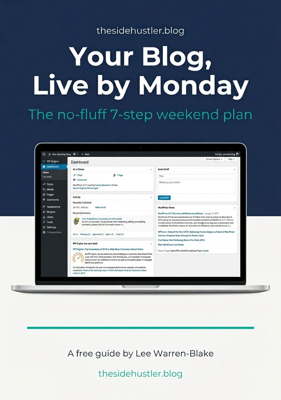
Download Your Free Blog Launch Roadmap
Get the no-fluff 7-step weekend plan that takes you from blank page to live blog — free instant download.
