
Table of Contents
This post contains affiliate links. If you click through and buy something, I may earn a small commission, at no extra cost to you. I only recommend tools I’ve actually used or thoroughly researched.
Starting free before spending money on something new isn’t cheap, it’s smart.
If you’re looking at bookkeeping as a potential career or side hustle and you want to test the water before committing to a paid course, that’s exactly the right instinct. There’s genuinely good free training available. And this post covers the best of it.
But here’s the part most roundup posts skip: a free bookkeeping course on its own doesn’t turn into income. What you do after matters just as much as where you start. So this post covers both: the best free bookkeeping courses online available in 2026, and the practical steps to take once you’ve finished one.
Free Bookkeeping Courses Online
If you want the full picture of what becoming a bookkeeper actually involves, qualifications, tools, earnings, first clients, How to Become a Bookkeeper in 2026 covers it all in one place. This post assumes you’re at the very beginning and you want to start without spending anything.
What Can You Actually Learn From a Free Bookkeeping Course?
Before the recommendations, let’s set honest expectations, because “free course” covers a wide range of quality.
The good news: free courses can genuinely teach you the fundamentals. What bookkeeping actually involves, how to record income and expenses, what bank reconciliation means and how to do it, how basic financial reports work. That’s a real and useful foundation.
What free courses typically don’t cover: the full business setup side of running a bookkeeping practice, how to find and onboard clients, deep software training, and formal certification. Those things either live behind a paywall or require separate resources.
But here’s the thing, the foundation is exactly what you need first. Before you spend anything, you need to know whether bookkeeping actually clicks for you. Free training answers that question at no cost. And if the answer is yes, you’ll know exactly what to invest in next.
The Best Free Bookkeeping Course to Start With
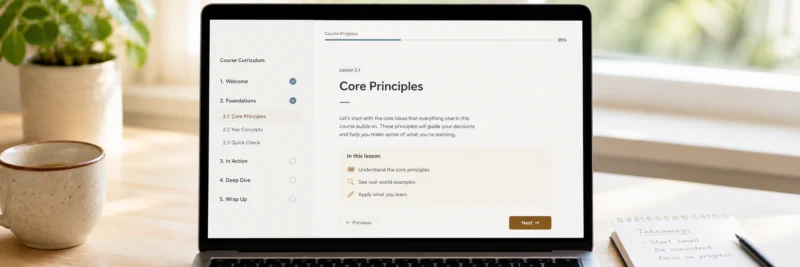
If I were pointing someone at a single free resource to start with, it would be the training at Bookkeepers.com.
Here’s why it stands out from the generic accounting tutorials you’ll find elsewhere: it’s built specifically for people who want to do bookkeeping as a business, not as an accountant, not as a corporate finance employee, but as a self-employed bookkeeper working with small business clients. That focus matters. Most free bookkeeping content teaches you accounting theory. This teaches you what it actually looks like to do bookkeeping work in a real client context.
It’s structured, not just a collection of videos. It covers the core concepts in a logical sequence. And it’s free, no credit card, no trial period, no catch.
What the Bookkeepers.com Free Course Covers
The free training covers the foundations you need to get started:
- What bookkeeping actually involves day to day
- How to read and understand basic financial records
- The core principles of double-entry bookkeeping
- How income and expenses are recorded and categorized
- What bank reconciliation is and how it works
- How financial reports fit together in a real business context
By the end of it you’ll have a clear picture of what the work involves, and a solid enough foundation to start practicing in real accounting software.
Other Free Resources Worth Knowing About

Bookkeepers.com is where I’d point you first, but it’s worth knowing what else is out there. Here’s an honest look at the other free options.
YouTube
There’s a lot of bookkeeping content on YouTube, and some of it is good. The problem is consistency, quality varies enormously, there’s no structure to guide you through the material in the right order, and you can spend hours watching videos without building a coherent skill set.
YouTube works well as a supplement, watching a video to understand a specific concept you’re stuck on, or seeing how something works in a particular piece of software. As a primary learning resource for a complete beginner, it’s too scattered to be reliable.
Coursera: Audit for Free
Coursera has some solid introductory accounting and bookkeeping courses from reputable institutions. The audit option lets you access the course content for free, lectures, reading materials, and exercises. The catch: auditing doesn’t give you a certificate. If you want the credential, you’ll need to pay.
Worth looking at if you want a more structured, academic approach to the fundamentals. Not a replacement for Bookkeepers.com’s practitioner-focused training, but a legitimate free option for anyone who learns well in a more formal environment.
SCORE
SCORE is a US-based nonprofit that offers free business education resources, including workshops, mentoring, and guides covering basic financial management for small business owners. It’s not a bookkeeping course in the traditional sense, but the financial literacy content is solid and the mentoring is useful if you’re thinking about running a bookkeeping business.
AccountingCoach
A free website covering accounting fundamentals, particularly strong on double-entry bookkeeping basics. Clear explanations, well-structured, with a quiz function that helps you check your understanding as you go.
Good as a reference and a supplement to a structured course. Not a complete learning pathway on its own, but a useful free tool to have in your back pocket when you need to strengthen your understanding of a specific concept.
Free vs Paid: When Does It Make Sense to Invest?

The free course answers one question: is bookkeeping right for you?
If you go through the Bookkeepers.com free training and it clicks, the work makes sense, you can see yourself doing it, and you want to take it further, that’s the signal that a paid course is worth considering.
Here’s what a good paid programme adds that free training typically doesn’t: the full business-building side. How to set up as self-employed, how to find and onboard clients, how to price your services, how to handle the practical and legal side of running a bookkeeping practice. The technical knowledge of bookkeeping is only part of what you need to turn it into income. The business side is the other part, and most free courses don’t go there.
For anyone who’s worked through the free training and decided this is the direction they want to go, the paid programme at Bookkeepers.com is the one I’d point to first. It covers the business-building side properly, not just the accounting knowledge, but the practical roadmap for building a client base and turning bookkeeping into a real income.
Worth the investment once you’ve confirmed the free course has clicked. And if you’re still weighing up whether bookkeeping is worth pursuing at all, Is Bookkeeping a Good Side Hustle? gives you the honest income picture.
What to Do After Your Free Bookkeeping Course

This is the section most people don’t think about before they start, and the most important one for anyone serious about turning this into income.
Here’s the sequence to follow once you’ve completed a free course.
Step 1: Get into the software. The concepts you’ve learned need to become practical skills. Start working in real accounting software, Wave has a free Starter plan that covers a lot of what you need at this stage. One thing worth knowing: bank reconciliation now sits behind Wave’s paid Pro plan (around $16 to $19 a month), it isn’t part of the free tier anymore. For the full breakdown of which software to learn and in what order, Best Bookkeeping Software for Small Businesses covers all three main options.
Step 2: Practice with real or simulated data. Create a fictional business in Wave. Record income and expenses, produce a basic profit and loss report, and if you’ve moved to the paid Pro plan, practice reconciling a bank account too, since that’s a skill you’ll need with real clients. Do this until it feels manageable, not perfect, just manageable. That’s the standard you need before you’re inside a real client’s accounts.
Step 3: Decide whether to pursue certification. You don’t need a formal credential to get your first client. But the AIPB Certified Bookkeeper designation and the NACPB’s CPB certification are the two US credentials worth knowing about if you want something credible to point to. Both achievable without a degree. Worth researching once you’re up and running.
Step 4: Sort your basic business setup. Register as self-employed, open a separate bank account for your business income, and get a simple online presence in place. How to Work From Home as a Bookkeeper covers the full practical setup, workspace, tools, client communication, and what a realistic working day looks like.
Step 5: Start looking for your first client. This is where the income begins. Start with your network, set up profiles on Upwork and Fiverr, and get a basic website live. The full strategy is in How to Get Bookkeeping Clients (With No Experience).
Work through these five steps in order, and don’t rush past step 3 just because certification feels optional, it genuinely is optional, but it’s worth a proper look once you know this is the direction you’re heading.
Can You Really Build a Bookkeeping Business Starting From Free Resources?
Yes, and plenty of people have done exactly that.
The free course gives you the foundation. The software practice gives you the confidence. The first client is where it becomes real. And once you have one happy client and a testimonial, the next one is significantly easier.
The honest caveat: the people who build bookkeeping into a real income tend to invest in their skills at some point. Either a paid course, a certification, or both. Not because the free training isn’t good, it is. But because the business-building side requires guidance that most free resources don’t provide.
Free gets you started. Investment gets you further. The right time to invest is when the free training has confirmed this is the direction you want to go, not before.
If you want the full income picture, Is Bookkeeping a Good Side Hustle? covers the numbers honestly. And if you’re looking at this alongside other options, Easy Freelance Side Hustles is worth a look for comparison.
Start Free, Then Decide
Starting free is the right call. It costs nothing, it answers the most important question, is this right for me?, and it builds a foundation you can work from immediately.
The free course at Bookkeepers.com is where I’d point anyone at this stage. Work through it properly. Then come back to the “what to do after” section in this post and follow the steps.
And when you’re ready for the full roadmap, from first course to first client, How to Become a Bookkeeper in 2026 has everything in one place. Once real client income starts coming in, Side Hustle Taxes 2026 covers what you’ll owe and what to set aside.