
Table of Contents

This post contains affiliate links. If you click through and buy something, I may earn a small commission — at no extra cost to you. I only recommend tools I’ve actually used or thoroughly researched.
Every home has a running list of small jobs that never quite get done: a dripping faucet, a wobbly shelf, a door that won’t close right, a nail popping out of a wall. Most homeowners don’t have the tools, the time, or the confidence to fix them, and they’re happy to pay someone who can. That’s a handyman side hustle.
It’s skilled, satisfying work with a clear result, and the pay is good. A handyman typically charges $40 to $80 per hour, and the jobs are short, varied, and repeatable. One good client with a list of small fixes can keep you busy for weeks.
This guide covers what it costs to start, what to charge, how to find clients, platforms versus direct work, safety, and taxes. It’s part of the broader Local Side Hustles series, so start there if you’re weighing this against other offline options.
Quick disclaimer: This article is general information to help you get started, not personalized legal, tax, or insurance advice. Rules vary by state and city, and some work requires a licensed contractor, so check with a local professional if you’re unsure about anything specific.
Why a Handyman Side Hustle Is Reliable Income
Handyman work stands out for reasons that matter when you’re starting from scratch:

- Endless, pent-up demand. Every homeowner has a list of small jobs, and the list never empties. Once people know you can fix things, they’ll hand you the list happily.
- High hourly value. Handyman rates run well above most side hustles, and the jobs are short, so each one pays off fast.
- Low startup cost. You probably own most of the tools already. A good starter kit is a few hundred dollars, not thousands.
- Varied and interesting. No two jobs are the same, which keeps it from feeling like grind. Every day is a different puzzle.
- Clear room to grow. Add bigger jobs, hire a helper, or focus on a niche like doors, drywall, or fences.
The honest trade-offs: it’s physical work, you need a baseline of skill, and you carry responsibility for other people’s homes. But if you’re wondering how to start a handyman business with no experience beyond basic home fixes, you’re closer than you think. For anyone handy, it’s one of the best-paying and most dependable local side hustles there is.
What the Work Actually Looks Like
A handyman handles the small-to-medium jobs that fall between a DIY fix and a full contractor hire:

- Fixing and replacing. Faucets, toilets, light fixtures, outlets, door handles, and locks. The classic small-repair work.
- Assembly and installation. Furniture, shelves, curtain rods, TV mounts, and appliances. More people need this than you’d think.
- Patching and painting. Filling holes, touching up walls, and painting rooms. Steady, straightforward work.
- Minor carpentry and drywall. Fixing trim, replacing baseboards, and patching small drywall damage.
- Outdoor work. Fence repairs, gutter cleaning, and small deck fixes. It extends your season well beyond the wall.
Here’s the key insight: you don’t need to master everything. Most clients have a short list of small jobs, and a handyman who does a handful of things well and reliably gets called back for everything. Reliability and a friendly attitude carry more weight than raw skill.
What It Costs to Start
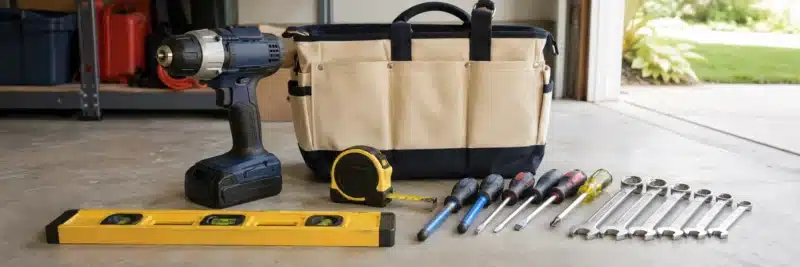
Wondering how to start a handyman business with no experience? The good news is you already know more than you think, and you can start with a modest kit and grow it as you take on more varied jobs. So what tools do you need to start a handyman business? Here’s a realistic starter budget:
| Item | Typical cost (US) |
|---|---|
| Basic cordless drill/driver set | $80–$150 |
| Hand tools (screwdrivers, wrench set, pliers, hammer, tape measure) | $60–$120 |
| Level, stud finder, and utility knife | $30–$60 |
| Miscellaneous (paint, patch, fasteners, tape) | $40–$80 |
| Tool bag to carry it all | $30–$60 |
| Consumables and restock | $20–$40/month |
You can launch for well under $500, and if you already own a basic tool kit, you’re looking at a few hundred or less. Start with the essentials, buy tools as specific jobs come in, and let the work pay for the upgrades.
Good tools are worth the money, but most jobs don’t need the most expensive version. A reliable mid-range drill and a solid basic kit will cover 90% of handyman work out of the gate.
How Much You Can Realistically Earn
How much does a handyman charge per hour? Handyman rates are among the healthiest of any local hustle. Most charge $40 to $80 per hour, and the rates vary by area and experience:
| Experience level | Typical hourly rate (US) |
|---|---|
| Starting out | $40–$55 |
| Established with reviews | $55–$70 |
| Experienced / specialized | $70–$100+ |
Now do the math. Ten billable hours a week at $50 is $500, and most evenings and weekends can fit that comfortably. Since the jobs are short, you’re also earning from the moment you start, with no wasted setup time.
The honest ceiling: it’s physical work, and your income is capped by your hours and your skill level. But even a modest, part-time schedule can pull in several hundred to well over a thousand dollars a month.
How to Find Clients
Wondering how to find handyman clients fast? The same local-hustle playbook applies, and word of mouth is your strongest channel:

- Start with your network. Friends, family, coworkers, and neighbors have small jobs they’ve been putting off. Tell them you’re available and watch the list grow.
- Post in neighborhood groups. Nextdoor and local Facebook groups are full of people asking for recommendations. Be specific about the jobs you handle and your rates.
- Use a platform to get going. Apps like TaskRabbit, Thumbtack, and Angi connect you with customers fast and help you build a review history.
- Partner with a local business. Real estate agents, property managers, and landlords need reliable small-repair help constantly. One good relationship can fill your calendar.
- Ask every client for referrals. “Know anyone with a list of small jobs?” after a good job brings new clients, because trust transfers.
The pattern is the same as every local hustle: network, platform, referrals. Once you’ve built a reputation as the reliable fix-it person, the jobs start finding you.
Pricing: How to Set Your Rates
Pricing is where beginners lose money, usually by charging too little. Here’s the simple approach:
- Charge a clear hourly rate. $40 to $80 an hour depending on your area and experience. Never undervalue skilled labor.
- Quote flat fees for common jobs. A faucet replacement or a room painted has a predictable price, and a flat quote reassures clients there are no surprises.
- Price in travel and materials. A small trip fee for far jobs and a markup on parts you supply keeps you from working for free on the drive.
- Raise your rates as you grow. Your first jobs are priced to build a client base. Once you’re established and booked, a rate increase is normal and clients usually accept it.
The biggest pricing mistake is quoting too low to win a job, then finding it takes twice as long as expected. A fair rate from the start keeps you profitable and keeps the client’s expectations honest.
Platforms vs. Direct Clients
Where you find handyman work matters a lot for what you take home:
- Platforms (TaskRabbit, Thumbtack, Angi): they bring customers and handle scheduling, but they take a cut, often 15% to 20% per job. Great for getting started and building reviews.
- Direct bookings: through your network, neighborhood referrals, and repeat clients. This is where you keep the full rate.
That cut matters. On a $200 job, a 20% fee costs you $40, which is a lot of mileage and materials. The apps are worth it when you’re building reviews, but they eat deep into your margin as a permanent model.
The strategy: use the platforms to build your first clients and a review history, then move regulars to direct bookings where you keep everything. Most successful handymen end up mostly direct, treating the apps as fill-in for gaps.
Safety, Insurance, and the Legal Basics
You’re working with tools, ladders, and electricity inside other people’s homes, so protection matters. This is not the corner to cut.

- Get liability insurance. If you damage something or someone gets hurt, you want coverage. General liability for a solo handyman is affordable, and the National Association of the Remodeling Industry is a good place to learn about professional standards.
- Know the licensing rules. Some states and cities require a license for certain work, and plumbing and electrical work often need a licensed contractor. Check your local rules and stay within them.
- Work safely. Ladders, power tools, and electrical work all carry real risk. Use the right tool, take your time, and never take on a job you’re not qualified for.
- Use a simple agreement. A one-page contract covering the job, price, and timeline protects you and looks professional.
None of this is overkill. A little structure keeps a great, well-paying hustle from becoming a costly accident, and it makes you look like the professional who gets referrals.
The Tax Angle
Handyman income is taxable, whether clients pay by cash, check, card, or app. Cash is easy to let slip unrecorded, and it’s a common mistake. App payments are reported to the IRS, and the habit of under-reporting catches up with people.
The good news is that handyman work has clear, useful deductions:
- Tools and equipment. Drills, hand tools, and other gear you buy for jobs. Larger equipment is depreciated over time.
- Materials. Supplies, fasteners, paint, and parts you buy for client jobs.
- Mileage. Driving between jobs, at the standard business mileage rate.
- Insurance and platform fees. Your liability coverage and any app commissions.
Because nothing is withheld from your payments, set aside a chunk of each job for taxes and pay quarterly. The full rules, the 2026 numbers, and the deduction tables are in Side Hustle Taxes 2026, a must-read for every local hustler.
Know Your Limits (and When to Say No)
This is the difference between a thriving handyman and a burned-out or liable one: knowing what you should not take on.
- Never fake skill. If you don’t know how to do a job safely, pass on it or recommend someone who can. A botched electrical or plumbing job is dangerous and expensive.
- Stay in your lane. Licensed trades like full electrical, major plumbing, and structural work are not handyman jobs. Refer them out and protect yourself.
- Set a job size limit. Decide your comfort zone, say jobs under a day or under a certain dollar amount, and politely turn down the rest.
- Get it in writing. For anything beyond a small task, a written scope of work prevents the endless “while you’re here” creep that eats your profit.
Every successful handyman has a list of jobs they turn down. Saying no to the wrong job is how you stay safe, stay insured, and keep the reputation that brings the right work.
How to Scale a Handyman Business
There’s a hard physical ceiling on one person’s billable hours, and you’ll hit it if you’re good. Scaling past it takes the same tools as any local hustle:

- Raise your rates. As your reputation and reliability grow, your price should too. Your early clients were priced to build a base, not to be your forever rate.
- Add specialized services. Focus on a niche like doors, drywall, or smart-home installs, and charge a premium for expertise.
- Hire a helper. A second set of hands lets you take on bigger jobs and covers you when your schedule is full.
- Build recurring relationships. Property managers and landlords need ongoing work. A few steady accounts smooth out the ups and downs.
Most people never get past the first step, because they treat it as a casual gig instead of a business. The ones who scale think in niches, recurring clients, and rising rates, not just single jobs.
The Bottom Line
Handyman work is one of the best-paying, most dependable local side hustles there is, and the demand is everywhere you look.
- Start for under $500 with a basic tool kit, and upgrade as jobs come in.
- Charge $40 to $80 an hour and quote flat fees for common jobs.
- Find clients through your network, platforms, and referrals, then move regulars to direct bookings.
- Get liability insurance, check local licensing rules, and never take on work you’re not qualified for.
- Set aside taxes quarterly and claim your tools, materials, and mileage.
Do that, and the small-job lists in your neighborhood become a dependable, well-paying source of extra income. If handyman work isn’t your fit, the Local Side Hustles pillar covers all the alternatives.
This is for informational purposes only and is not legal, tax, financial, or insurance advice. Rates, platform fees, licensing, and requirements vary and can change. For advice specific to your situation and location, consult a qualified professional.