
Table of Contents

This post contains affiliate links. If you click through and buy something, I may earn a small commission — at no extra cost to you. I only recommend tools I’ve actually used or thoroughly researched.
House cleaning is one of those side hustles that sounds too simple to be worth it, and that’s exactly why so many people overlook it. Every home needs cleaning, it has to be done over and over, and most homeowners would rather pay someone than spend their weekend doing it. That’s a built-in, never-ending stream of demand.
It’s honest physical work with a clear, visible result, and the math is good. A standard residential clean pays $30 to $60 per visit, takes a couple of hours once you have a system, and comes back weekly or bi-weekly. It’s one of the lowest-cost side hustles to start, which makes it a smart house cleaning side hustle for almost anyone.
This guide covers what it costs to start, what to charge, how to find clients, platforms versus direct work, safety, and taxes. It’s part of the broader Local Side Hustles series, so start there if you’re weighing this against other offline options.
Quick disclaimer: This article is general information to help you get started, not personalized legal, tax, or insurance advice. Rules vary by state and situation, so check with a local professional if you’re unsure about anything specific.
Why House Cleaning Is a Great Side Hustle
House cleaning works as a side hustle because the fundamentals are unusually strong:
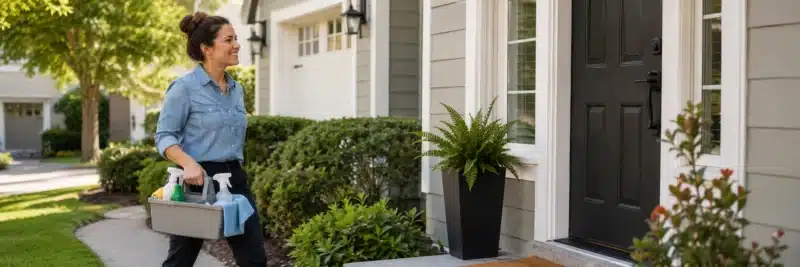
- Built-in, recurring demand. Cleaning is never finished. The same clients rebook every week or two, so one good customer becomes a steady stream.
- Lowest-cost start of almost any hustle. You can launch with a caddy, a vacuum, and a few supplies for well under $300. No certification, no big equipment.
- Fast first client. A single post in a neighborhood group can land you your first clean within days. The demand is everywhere.
- Simple to learn. You already know how to clean. The skill is building an efficient system and doing it reliably, and that develops fast.
- Clear room to grow. Add deep cleans, move-out cleans, and commercial work, and the same skills earn far more per hour.
The honest trade-offs: it’s physical work, it can be monotonous, and your income is capped by the hours you can put in. But the barriers to entry are lower than almost anything else, and the repeat-client model is one of the most reliable in the local hustle world.
What the Work Actually Looks Like
Most people picture a basic tidy, but the real service menu is bigger, and each tier pays differently:
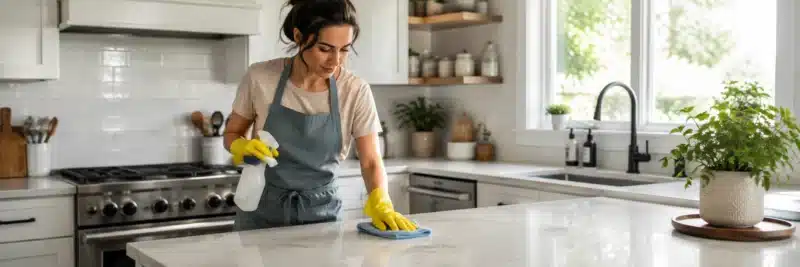
- Standard clean. The core service. Dusting, vacuuming, mopping, and cleaning bathrooms and kitchens. This is the recurring weekly or bi-weekly clean.
- Deep clean. A thorough top-to-bottom: inside appliances, baseboards, window sills, and corners that a standard clean skips. It’s slower and charges more.
- Move-out and move-in clean. Empty homes cleaned to a high standard before or after a move. These pay well and are often one-off jobs.
- Add-ons. Windows, organizing, laundry, and fridge cleaning. These turn a routine visit into a bigger ticket, and they’re easy to add once you’re trusted.
Here’s the key insight: the first clean of a home is the hardest, and every visit after is easier. You learn the house, the layout, and the client’s preferences, and a home that took four hours the first time takes two and a half by the third visit. Speed is where the money is.
What It Costs to Start
This is where house cleaning shines. You don’t need thousands of dollars in equipment, you need a caddy and some supplies. Here’s a realistic starter budget:
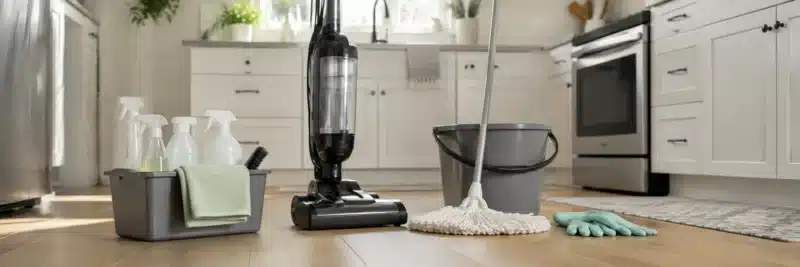
| Item | Typical cost (US) |
|---|---|
| Cleaning caddy and supplies (sprays, cloths, scrubbers) | $40–$80 |
| Vacuum (good quality) | $100–$250 |
| Mop and bucket | $30–$60 |
| Microfiber cloths and duster | $20–$40 |
| Gloves, mask, and safety basics | $15–$30 |
| Refills and restock | $20–$40/month |
You can launch for well under $300, and if money is tight, a hand-me-down vacuum and a $50 caddy get you going even cheaper. Many people start with a basic kit, then upgrade the vacuum once the first few clients pay.
The supplies are cheap and they pay for themselves fast. A $200 outlay is covered after a handful of cleans, and after that it’s mostly profit per visit.
How Much You Can Realistically Earn
Cleaning rates vary by area and by the size of the home, but here’s a realistic picture. Most clients pay $30 to $60 per standard clean, with deep and move-out cleans charging more:
| Service | Typical price (US) |
|---|---|
| Standard clean (1–2 bedrooms) | $30–$50 |
| Standard clean (3+ bedrooms) | $50–$80 |
| Deep clean | $100–$250 |
| Move-out / move-in clean | $150–$400 |
Now do the math. Three standard cleans a day at $45 each is $135 for a day, and most of those visits take a couple of hours once you’re fast. Add a weekly deep clean at $150 and the numbers stack into serious side income.
The honest ceiling: it’s physical labor, so your body and your daylight limit how many homes you can do. But for a side hustle pulling in a few hundred to well over a thousand a month, that’s a very reasonable trade.
How to Find Clients
Finding cleaning clients follows the same local-hustle playbook, and it’s one of the easiest markets to tap:

- Start with your network. Friends, family, coworkers, and neighbors. Your first clients are almost always people who already know and trust you.
- Post in neighborhood groups. Nextdoor and local Facebook groups are full of people looking for reliable cleaning help. Be specific about your area, your services, and your rates.
- Use a platform to get going. Apps like TaskRabbit, Handy, and Thumbtack connect you with customers fast and handle scheduling and payment. They’re the quickest way to get your first jobs and reviews.
- Target short-term rentals and small offices. Local businesses and vacation rentals need recurring cleaning and pay reliably. One good commercial account can anchor your whole week.
- Ask every client for referrals. “Know anyone who could use a hand?” after a great clean brings new clients, because trust transfers.
The pattern is the same as every local hustle: network, platform, referrals. Once you’ve got a few happy homes on a recurring schedule, the neighborhood starts referring you on its own.
Pricing: How to Set Your Rates
Pricing is where beginners lose money, almost always by charging too little. Here’s the simple approach:
- Price by the job, not the hour. Quote a flat per-clean fee based on the size and condition of the home. It’s predictable for you and for the client.
- Charge more for deep and one-off cleans. These are slower and more demanding, so they should command a clear premium.
- Offer a weekly or bi-weekly package. A flat recurring fee is easier for clients to pay and gives you guaranteed, predictable income.
- Raise your rates as you grow. Your first cleans are priced to build a client base. Once you’re established and booked, a rate increase is normal and clients usually accept it.
Here’s the biggest pricing mistake: under-quoting to win a job, then working yourself ragged for peanuts. One or two “cheap” cleans fill your schedule and your body, leaving no room for the good-paying work. Price fairly from the start.
Platforms vs. Direct Clients
Where you find cleaning work matters a lot for what you take home:
- Platforms (TaskRabbit, Thumbtack, Handy): they bring customers and handle scheduling and payment, but they take a cut, often 15% to 20% per job. Great for getting started and building reviews.
- Direct bookings: through your network, neighborhood referrals, and returning clients. This is where you keep the full rate.
That cut matters. On a $50 clean, a 20% fee costs you $10, which adds up fast across a full day. The apps are worth it when you’re building reviews, but they eat deep into your margin as a permanent model.
The strategy: use the platforms to build your first clients and a review history, then move regulars to direct bookings where you keep everything. Most successful cleaners end up mostly direct, treating the apps as fill-in for gaps in the schedule.
Supplies and Recurring Costs
The ongoing costs are small but real, and they eat into profit if you don’t track them:
- Product restock. Sprays, cloths, and scrubbers wear out and run out. Budget $20 to $40 a month per active client base.
- Equipment wear. Vacuum filters and bags, mop heads, and replacements. Keep spares so you’re never caught short mid-week.
- Mileage. Driving between homes adds up. Cluster your clients by area and track every mile for tax time.
- Marketing. A flyer, a simple website, or a sponsored neighborhood post. Keep it small and let referrals do the heavy lifting.
None of these are big, but they compound. A little tracking separates a hustle that quietly profits from one that feels like it should profit but never quite does.
Safety, Insurance, and the Legal Basics
You’re working with cleaning chemicals and inside other people’s homes, so a little protection goes a long way:
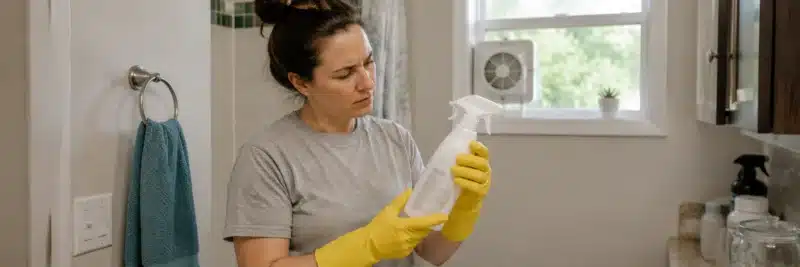
- Get liability insurance. If you knock something over, damage a floor, or a client has an accident, you want coverage. Cleaning liability policies are affordable for a solo operator, and the American Cleaning Institute is a solid place to learn about professional standards and safe product use.
- Use products safely. Read labels, never mix chemicals like bleach and ammonia, and wear gloves and a mask. Most cleaning accidents are preventable.
- Check local rules. Some cities require a simple business license for services. A quick check with your city answers this in minutes.
- Use a simple agreement. A one-page contract covering the service, price, and schedule protects you and looks professional.
None of this is overkill. A little structure keeps a great, simple hustle from becoming a costly accident, and it makes you look like the professional who gets referrals.
The Tax Angle
Cleaning income is taxable, whether clients pay by cash, check, card, or app. Cash is easy to let slip unrecorded, and it’s a common mistake. App payments are reported to the IRS, and the habit of under-reporting catches up with people.
The good news is that house cleaning has clear, useful deductions:
- Supplies. Cleaning products, cloths, gloves, and equipment you buy for jobs.
- Mileage. Driving between client homes, at the standard business mileage rate.
- Insurance and platform fees. Your liability coverage and any app commissions.
- Marketing and phone. The business-use percentage for scheduling and promoting your service.
Because nothing is withheld from your payments, set aside a chunk of each job for taxes and pay quarterly. The full rules, the 2026 numbers, and the deduction tables are in Side Hustle Taxes 2026, a must-read for every local hustler.
How to Scale a House Cleaning Business
There’s a hard physical ceiling on one person’s cleaning hours, and you’ll hit it if you’re good. Scaling past it takes the same tools as any local hustle:
- Raise your rates. As your reputation and reliability grow, your price should too. Your early clients were priced to build a base, not to be your forever rate.
- Add higher-value services. Deep cleans, move-out cleans, and organizing earn more per hour than a standard clean and deepen each client’s value.
- Hire a helper. A second set of hands lets you take on more homes and step back from the daily grind. This is where a side hustle becomes a small business.
- Build a route. Group your clients by area so you’re not driving across town between jobs. A tight route is the difference between profit and exhaustion.
Most people never get past the first step, because they treat it as a casual gig instead of a business. The ones who scale think in routes, recurring clients, and rising rates, not just single cleans.
The Bottom Line on the House Cleaning Side Hustle
House cleaning is one of the most reliable, lowest-barrier side hustles there is, with demand on every street and income that comes back week after week.
- Start for under $300 with a caddy, vacuum, and supplies, and upgrade as you earn.
- Charge $30 to $60 per standard clean and more for deep and move-out cleans, with packages for guaranteed income.
- Find clients through your network, platforms, and referrals, then move regulars to direct bookings.
- Get liability insurance and handle cleaning products safely.
- Set aside taxes quarterly and claim your supplies, mileage, and marketing.
Do that, and the homes in your neighborhood become a dependable, well-paying source of extra income you can start this week. If house cleaning isn’t your fit, the Local Side Hustles pillar covers all the alternatives, and dog walking and pet sitting pairs naturally if you want something lighter on the chemicals.
This is for informational purposes only and is not legal, tax, financial, or insurance advice. Rates, platform fees, and requirements vary and can change. For advice specific to your situation and location, consult a qualified professional.