
Table of Contents

This post contains affiliate links. If you click through and buy something, I may earn a small commission, at no extra cost to you. I only recommend tools I’ve actually used or thoroughly researched.
Search “best bookkeeping software for small businesses” and you’ll get a list of fifteen tools, a feature comparison table the size of a spreadsheet, and no clear answer on what to actually use.
So let’s cut through that.
This post covers the three bookkeeping tools that actually matter for small businesses and freelance bookkeepers in 2026, Wave accounting, FreshBooks, and QuickBooks. Not every option on the market. Just the three worth knowing, explained honestly, with clear guidance on which one fits your situation. If you’re looking for the best bookkeeping software for small businesses, this is the place to start.
If you’re still figuring out whether bookkeeping is the right path for you, How to Become a Bookkeeper in 2026 is the better starting point. This post assumes you’ve made that decision and you’re ready to choose your tool.
What to Look for in Bookkeeping Software
The right software depends on your situation, not on which one has the most features. Here’s what actually matters.
Ease of use. If the software feels like doing homework every time you open it, you won’t use it consistently. Consistency is everything in bookkeeping.
Cost. Free options exist and they’re genuinely good. Paid options have more features, but they need to earn their monthly fee. One upside either way: whatever you spend here is deductible for your bookkeeping side hustle taxes, so keep the receipts.
Core features. For most small businesses, the list is short: invoicing, expense tracking, bank reconciliation, and basic financial reports. Everything beyond that is a bonus.
Integrations. Does it connect with the tools you already use, your bank, your payment processor, your payroll system?
Support. When something goes wrong, can you get help quickly? This matters more than most people think until they actually need it.
One extra thing for freelance bookkeepers to consider: which software are your clients most likely to already be using? Because the tool you learn first shapes the clients you can work with straight away.
The Three Bookkeeping Tools Worth Knowing in 2026
Most small businesses and freelance bookkeepers don’t need to look beyond these three.
Wave covers the free end of the market, and does it well. FreshBooks hits the sweet spot for freelancers and small service businesses. QuickBooks is the industry standard that most established businesses already use.
Here’s how they compare at a glance:
| Wave | FreshBooks | QuickBooks | |
|---|---|---|---|
| Price | Free | From $19/mo | From $35/mo |
| Best for | Beginners, solo businesses | Freelancers, small service businesses | Established businesses, client work |
| Ease of use | Very easy | Very easy | Moderate |
| Invoicing | Yes | Yes | Yes |
| Bank reconciliation | Yes | Yes | Yes |
| Payroll | Paid add-on | Paid add-on | Yes (higher plans) |
| Mobile app | Yes | Yes | Yes |
| Free trial | Free forever | 30 days free | 30 days free |
Now let’s get into each one properly.
Wave: Best Free Bookkeeping Software for Small Businesses
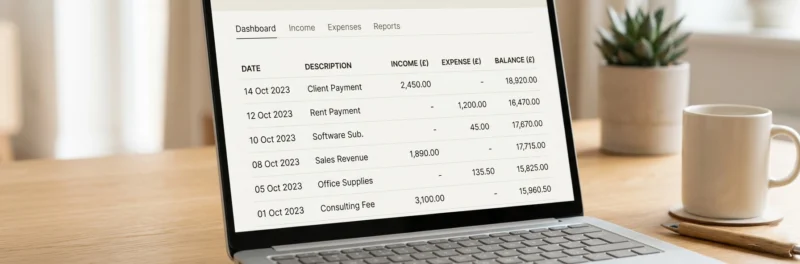
Most free software is free for a reason, it’s limited enough that you’ll eventually need to pay to get anything useful done. Wave is different, up to a point worth understanding clearly.
It’s a genuinely capable free tier. Income and expense tracking, unlimited invoicing, and basic financial reporting are included at no cost. For a solo business owner or a freelance bookkeeper who wants to practice in a real tool before working with clients, the free plan covers a real amount without spending a dollar.
One thing worth knowing upfront, though: bank reconciliation, a core bookkeeping task, now sits behind Wave’s paid Pro plan (around $16 to $19 a month). It isn’t part of the free tier anymore. So if reconciliation is central to how you or your clients work, budget for the paid plan rather than assuming the free version covers it.
The way it works on the free plan: you connect your bank account, categorize transactions as they come in, and produce invoicing that’s clean and professional. The reports, profit and loss, balance sheet, cash flow, are solid for the basics.
Where it has other limits: payroll is a paid add-on, integrations with third-party tools are fewer than the paid alternatives, and support response times can be slower than you’d like. For a small business with straightforward finances, none of that is a dealbreaker. For a larger business with complex needs, worth knowing before you commit.
Wave is also the right call if you’re a freelance bookkeeper who wants to practice before working inside a real client’s accounts. No monthly fee, no time pressure, and the skills transfer directly to the paid tools when you’re ready.
Who Should Choose Wave?
Solo business owners and freelancers who need solid bookkeeping basics without a monthly cost. Anyone who wants to start without spending anything and upgrade later if the business grows into it. Freelance bookkeepers at the beginning of their learning curve who want real software to practice in, no risk, no commitment.
FreshBooks: Best Bookkeeping Software for Freelancers and Service Businesses
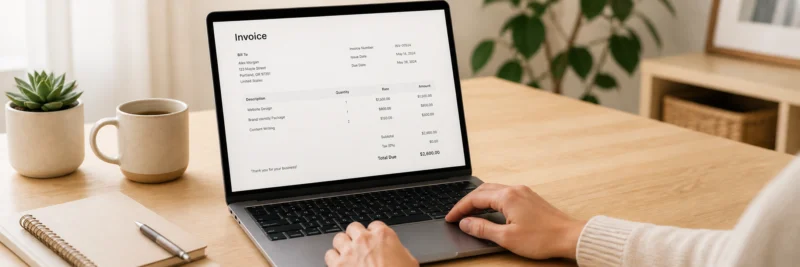
FreshBooks is built for people who aren’t accountants. And it shows, in the best possible way.
The interface is clean, the workflows make sense, and using it day to day doesn’t feel like a chore. For freelancers and small service businesses who send invoices regularly, track expenses, and want a tool that handles client communication professionally, FreshBooks does the job better than most alternatives at its price point.
What it does particularly well: invoicing is polished, recurring invoices, automatic payment reminders, and online payment acceptance all built in. Time tracking is included, which is useful if you bill by the hour. The client portal lets clients view and pay invoices in one place. And the mobile app is one of the better ones in this category, actually useful rather than just functional.
On the bookkeeping side, expense tracking, bank reconciliation, and reporting are all solid. Reporting is slightly limited on the lower-tier plans, and it’s worth checking what’s included at each price point before you commit. But for the typical freelancer or small service business, it covers everything that actually matters.
Cost starts at $19 per month, and there’s a 30-day free trial to test it properly before paying anything.
One honest note for freelance bookkeepers: FreshBooks isn’t as widely used by clients as QuickBooks, so it may not be the first tool you’re asked to work in. But if your target clients are creative freelancers, consultants, or small service businesses, it’s well worth knowing. I’ve done a full deep-dive in my FreshBooks Review if you want the complete picture before deciding.
Who Should Choose FreshBooks?
Freelancers and small service businesses who send invoices regularly and want software that handles the client-facing side cleanly. Anyone who finds QuickBooks more than they need but wants something more polished than a free tool. Freelance bookkeepers whose target clients are in the creative, consulting, or service space.
Give FreshBooks a try free for 30 days, no commitment required.
QuickBooks: Best Bookkeeping Software for Established Businesses and Client Work
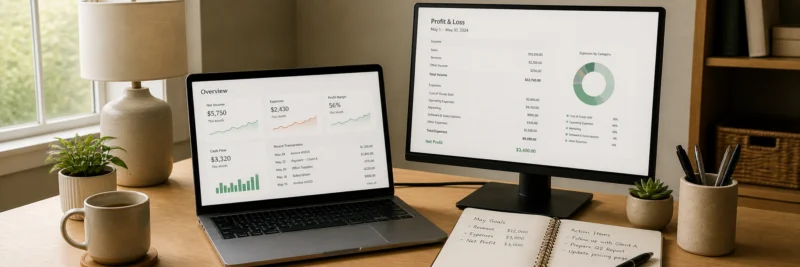
QuickBooks isn’t the most beginner-friendly tool on this list. But there’s a reason it’s the industry standard, and that reason matters if you’re serious about bookkeeping.
Most established small businesses already use it. Most accountants work in it. Most payroll systems integrate with it. When a small business owner hires a bookkeeper and asks what software they use, QuickBooks is the answer they’re expecting most of the time. For a freelance bookkeeper, knowing QuickBooks well opens more doors than any other single skill.
On the features side, it’s the most comprehensive of the three. Detailed financial reporting, inventory tracking, payroll on higher plans, a wide library of integrations, and a large network of accountants and bookkeepers who can step in when needed. For a business that’s grown beyond the basics, multiple employees, more complex finances, detailed reporting requirements, QuickBooks handles it in a way the other two can’t fully match.
The learning curve is real. It’s not difficult once you know what you’re doing, but it takes longer to get comfortable in than Wave or FreshBooks. And at $35 per month to start, it’s the most expensive of the three. Worth it for the right business. Less so if your needs are genuinely simple.
For freelance bookkeepers: learn QuickBooks once you’ve got the fundamentals solid, even if you start with Wave. The client base it opens up is worth the investment in time.
Who Should Choose QuickBooks?
Established small businesses with more than a handful of employees, inventory to track, or reporting needs that go beyond the basics. Freelance bookkeepers who want to work with the widest possible range of clients and take on more complex accounts.
Which Bookkeeping Software Should You Learn First?

If you’re a freelance bookkeeper deciding where to start, here’s the honest answer.
Begin with Wave. It’s free, it’s capable, and it gets you comfortable with the core workflows, categorizing transactions and producing basic reports, without any financial commitment. Spend a few weeks in it with real or practice data and you’ll have a solid foundation. Just remember that reconciliation itself sits behind Wave’s paid Pro plan, so you’ll want to practice that specific skill either on the paid tier or once you’ve moved into FreshBooks or QuickBooks.
Then invest time in QuickBooks. It has the largest client base, which means the most options when you’re looking for work. The skills you built in Wave transfer directly, the concepts are the same, the interface is just different.
FreshBooks is worth adding if your target clients are freelancers and small service businesses. Not a replacement for QuickBooks, a complement to it.
For the detailed head-to-head on all three, QuickBooks vs FreshBooks vs Wave breaks it down in one place.
And if you want the full guide to setting up your remote bookkeeping business once you’ve chosen your software, How to Work From Home as a Bookkeeper covers everything from workspace setup to how client relationships actually work.
Once you’ve picked a starting point, the fastest way to get comfortable with it is real practice, ideally alongside a proper foundation in the fundamentals rather than just clicking around the interface.
What About Other Bookkeeping Software?
There are other tools worth knowing exist: Xero, Zoho Books, and Sage among them.
This post focuses on Wave, FreshBooks, and QuickBooks because they’re the three most relevant options for small businesses and freelance bookkeepers in the US market. Xero is more commonly used in the UK, Australia, and New Zealand than in the US. Zoho Books and Sage are solid products but have a smaller footprint among the small businesses most freelance bookkeepers will be working with.
If you have a specific reason to look at Xero, a client who uses it, for instance, it’s worth exploring. But for most people starting out, the three covered here are the ones worth your time.
The Short Version: Which One Is Right for You?
Here’s the decision in plain terms.
Start with Wave if you want to get going without spending anything. It handles the basics well and the price is unbeatable.
Choose FreshBooks if you’re a freelancer or small service business who sends invoices regularly and wants software that feels good to use. The 30-day free trial makes it easy to test before you commit.
Go with QuickBooks if you’re running a more established business with complex needs, or if you’re a freelance bookkeeper who wants to work with the widest possible range of clients.
Whichever one you choose, the free course at Bookkeepers.com is the best place to learn how to use it in a real client context, not just the theory, but the practical application that gets you ready for real work.
And if you’re still figuring out the bigger picture, How to Become a Bookkeeper in 2026 covers everything from qualifications to your first client in one place.