
Table of Contents
This post contains affiliate links. If you click through and buy something, I may earn a small commission — at no extra cost to you. I only recommend tools I’ve actually used or thoroughly researched.
Choosing one of the best niches for print on demand is one of those decisions that feels enormous before you make it and surprisingly manageable once you do. The fear is that you’ll pick the wrong one and waste months of effort. The reality is that getting started in an imperfect niche is almost always better than staying stuck in the planning phase.
That said, niche selection does matter. It determines who finds you, whether they buy, whether they come back, and whether Etsy’s algorithm knows who to show your products to. So here are the niches worth considering in 2026, why each one works, and a simple framework for making the decision without overthinking it.
Why Your Niche Matters More Than Your Product
Two shops can sell identical mugs. One targets a specific, passionate audience. One doesn’t. They’ll have dramatically different results, not because one has better designs or a bigger budget, but because one shop has an identity and the other doesn’t.
A niche gives the Etsy algorithm something to work with. It gives buyers the feeling that this shop was made for them. And it gives you a clear direction for everything you create, so instead of staring at a blank canvas wondering what to design next, you have a specific person in mind and a specific community to serve.
The income strategy behind this is covered in more depth in the how to make money with print on demand post, but the short version is this: niche shops build momentum. General shops don’t.
What Makes a Print on Demand Niche Worth Going Into?
Not every niche is worth your time. Here’s the filter to run any idea through before you commit.
Passion and identity. Does this group of people care deeply enough about this thing to buy products that reflect who they are? Pet owners, nurses, runners, these are people for whom the identity is real and the buying habit exists. “People who like Tuesdays” is not a niche.
Search demand. Are people actively searching for products in this niche on Etsy and Pinterest? Search both platforms before you commit. Existing products with hundreds of sales and active Pinterest boards are signals that a buyer audience is there.
Gifting potential. Can products in this niche be bought as gifts? Gifting niches have bigger, more predictable sales spikes, and the buyer and the end user are often different people, which doubles the potential audience.
Design accessibility. Can a beginner create competitive designs here without a professional illustration background? Some niches live or die on complex artwork. Others sell consistently on clean typography and simple graphics that anyone can create in an afternoon.
The Best Niches for Print on Demand in 2026
These aren’t the only niches worth going into. But they’re the ones with the strongest combination of demand, gifting potential, and design accessibility for someone starting out.

1. Pet Owners (by Breed)
This is the classic POD niche, and still one of the strongest. Pet owners are passionate, identity-driven, and buy gifts constantly. The love people have for their animals is real, and it translates directly into buying behavior.
The key is breed specificity. “Dog lover” is a category, not a niche. “Dachshund owner” is a niche. “Bengal cat owner” is a niche. The more specific you get, the less competition you face, and the more likely someone is to see your product and feel like it was made exactly for them.
Best products: mugs, tote bags, t-shirts, phone cases, ornaments. Design angle: illustrated breed portraits, funny breed-specific observations, gift positioning for birthdays and Christmas.
Practical tip: Go one level deeper than the breed. Dachshund owners who work from home. Labrador owners who also love running. Overlapping identities create more specific, less competitive niches.
2. Professions and Occupations
Nurses, teachers, firefighters, vets, paramedics, people whose job is core to their identity buy products that reflect it and receive them as gifts constantly. Colleagues buy for colleagues. Families buy for the professional in their life. The gifting angle is strong and the occasions are plentiful, work anniversaries, retirements, Christmas, birthdays.
Best products: mugs, t-shirts, tote bags, hoodies, ornaments. Design angle: profession-specific humor, pride messaging, gift-occasion positioning.
Practical tip: Niche down by specialty. Not just “nurse”: ER nurse, pediatric nurse, ICU nurse. Not just “teacher”: elementary teacher, substitute teacher, special ed teacher. The more specific, the less saturated.
3. Hobbies and Interests
Running, hiking, yoga, gardening, knitting, reading, coffee obsessives, hobbies create strong identity communities with buying habits to match. People passionate about a hobby want products that signal that passion, and they buy them for themselves and as gifts for others who share it.
The key is finding hobbies with an audience large enough to sustain a shop but not so mainstream that the niche is saturated. “Fitness” is too broad. “Trail running” is a niche. “Ultra marathon running” is even more specific.
Best products: apparel, mugs, tote bags, water bottles, prints. Design angle: inside jokes and references that only people in the hobby will immediately get, the kind of thing that makes someone laugh and think of three people to send it to.
Practical tip: The more niche-specific the humor, the stronger the “that’s literally me” reaction, and the more likely a buyer becomes a repeat customer when you release more designs for the same community.
4. Gifting Occasions (Seasonal)
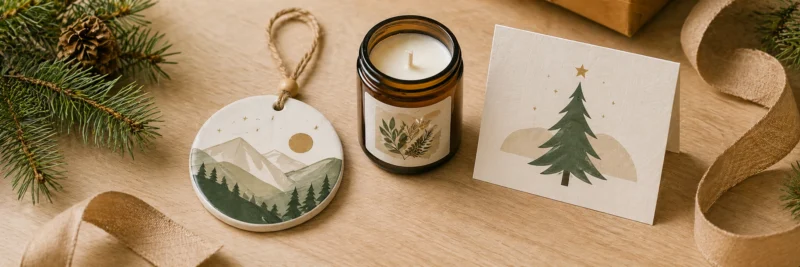
Christmas, Mother’s Day, Father’s Day, Valentine’s Day, occasion-based niches function differently from audience-based ones, but they work just as well on Etsy because buyers search by occasion. Someone needing a Christmas gift for their sister searches “funny sister Christmas gift,” not “products for sisters.”
This is the most underexploited opportunity in print on demand for beginners. The seasonal demand spikes are enormous, competition is more manageable than evergreen niches, and the design brief is clear: this needs to feel like a gift for a specific person on a specific occasion.
The Gifting Gold free workshop from Gold City Ventures is built around this angle. Emily reports over $800,000 in Etsy sales across her two shops, mostly from print on demand, primarily giftable seasonal products, and the workshop walks through her exact approach to product selection and shop positioning. Those are her own figures, not a typical result, but it’s free and worth watching before you decide what to focus on.
Best products: ornaments, mugs, candles, prints, personalized items. Design angle: specific occasion plus specific recipient identity plus personal touch.
Practical tip: Start building seasonal products 8-10 weeks before the occasion. A Christmas ornament listed in late October is already behind. Aim for mid-to-late October for Christmas, early December for Valentine’s Day, and early March for Mother’s Day.
5. Family Roles and Milestones
New moms, grandparents, best friends, sisters, godparents, new homeowners, family role products sell consistently because they make obvious, personal gifts. The design angle is identity-affirmation, products that make the recipient feel seen and celebrated in their role.
This niche overlaps with gifting occasions but works year-round, not just seasonally. A “best grandma” mug sells in January as well as December.
Best products: mugs, t-shirts, prints, ornaments, candles. Design angle: warm and affirming with specific enough humor to feel personal rather than generic.
Practical tip: Personalization angles outperform generic family role products. “Gifts for dog mom,” “first Mother’s Day,” “new grandparent 2026,” the more specific the search intent, the less competition you face.
6. Mental Health and Wellbeing
A growing niche with strong community identity: anxiety awareness, therapy humor, sobriety milestones, self-care messaging. Buyers here respond strongly to products that make them feel understood rather than judged.
Tone matters more in this niche than almost any other. Gentle humor, affirmation, and community belonging work well. Anything that feels trivializing or commercially opportunistic won’t land, and can actively damage a shop’s reputation.
Best products: mugs, prints, tote bags, t-shirts, journals. Design angle: relatable observations and affirmations that feel real rather than performed.
Practical tip: The recovery and sobriety milestones sub-niche, one year sober, two years sober, milestone celebrations, has particularly strong gifting potential and is less competitive than the broader mental health category.
7. Fandoms and Pop Culture (With Caution)
Sports teams, TV shows, music, fandoms are enormous and passionate. But this is also the niche most likely to get a shop shut down. Fan art of copyrighted characters, trademarked logos, or distinctive fictional elements will get listings removed and accounts banned.
The safe approach is inspired by, not copied from. Generic sports culture rather than specific team logos. “Book lover” rather than specific franchise references. “True crime fan” rather than specific show characters.
Practical tip: Fandom-adjacent is always safer than fandom-direct. “Bookish” as a niche, “horror fan” as a niche, strong communities, active buyers, no IP risk.
8. Political and Social Identity
Feminism, LGBTQ+ pride, environmental activism, these communities buy products that reflect their values and gift them within their network. Demand is real, buyers are passionate, and the occasions are strong.
Design angle: affirmation, pride, solidarity. This niche rewards authenticity and punishes anything that feels commercially opportunistic. Buyers in these communities can tell the difference between a designer who understands them and one who’s just trying to sell to them.
Practical tip: Start with the broadest, most established versions of these niches before trying to niche down further. Proven demand is always a better starting point than an untested sub-niche.
9. Local and Regional Pride
City pride, state pride, regional identity, “Don’t Mess With Texas,” “Made in Detroit,” “Born and raised in Brooklyn.” Local pride products have strong gifting potential and relatively low competition compared to national-scale niches.
Best products: mugs, t-shirts, prints, tote bags. Design angle: local landmarks, regional slang and humor, state or city-specific references that insiders love and outsiders don’t fully get.
Practical tip: The more specific the geography, the less competition you face. A shop built around a single city or state faces far less competition than one built around “American things,” and the audience is still more than large enough to sustain consistent sales.
10. Humor and Personality Types
Introvert humor, overthinking jokes, night owl solidarity, personality-based niches work because people see themselves in the product and also see someone they know in it. That dual appeal makes it both a self-purchase and a gift.
The difference between this working and not working is specificity. Generic motivational content is everywhere. Specific, sharp observations about a particular type of person, the kind that make someone laugh and immediately tag a friend, are much harder to find and much more likely to convert.
Best products: mugs, t-shirts, tote bags, prints, phone cases. Design angle: relatable observations that feel like they came from inside the experience.
Practical tip: The overlap between a personality type and another niche creates an even more specific angle. Introverted dog mom. Overthinker who loves plants. These intersections are often underserved and straightforward to design for.
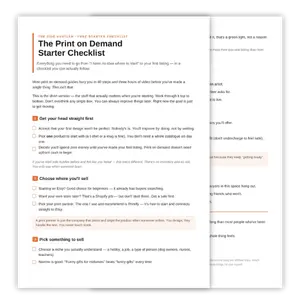
Download Your Free Print on Demand Starter Checklist
The two-page checklist that takes you from ‘no idea where to start’ to your first live listing — yours the second you sign up.
How to Choose the Right Niche for You
The list gives you options. Here’s the framework for making the actual decision.
Are You Interested in This Niche?
You’ll be creating designs for this audience for months. You don’t need to be obsessed with it, but you need to understand the community well enough to design for it authentically. The designs that resonate feel like they came from inside the community, not from someone who Googled it for twenty minutes.
If you’re a runner designing for runners, a nurse designing for nurses, a dog owner designing for dog owners, you already understand what makes your audience tick. That’s a real advantage.
Can You Find This Audience on Etsy and Pinterest?
Before you commit, search for the niche on both platforms. On Etsy, look for existing products with real sales, hundreds or thousands of reviews. On Pinterest, look for active boards and popular pins. Both are signals that a buyer audience exists and is actively looking.
If you can’t find existing products selling in a niche, that’s rarely a sign of an untapped goldmine. It’s more often a sign that the demand isn’t there.
Is There a Gifting Angle?
Products that can be bought as gifts have bigger, more predictable sales spikes. A nurse mug can be bought by nurses for themselves, by colleagues as leaving gifts, by family for Christmas, and by friends for birthdays. That’s four different buyer types for one product.
If you can see how your niche products would be bought as gifts, for what occasion, by whom, that’s a strong commercial signal. The best print on demand products post covers the categories with the strongest gifting potential in more detail.
The Biggest Niche Mistake to Avoid
Choosing a niche that’s interesting to you but not searchable by buyers.
Your passion for competitive dog grooming might be real, but if nobody is searching for it on Etsy, great designs won’t overcome that. The niche has to exist in the buyer’s mind, not just the seller’s.
The fix is simple: search first, commit second. Ten minutes on Etsy and Pinterest before you choose a niche will tell you more than any amount of planning. If the demand is there, you’ll see it. If it isn’t, you’ll know to look elsewhere.
Once you’ve chosen your niche and you’re ready to list, the print on demand on Etsy guide covers the full process, including how to write listings that Etsy’s algorithm actually finds.
How to Get Started in Your Chosen Niche
Once the decision is made, the process is the same regardless of which niche you’ve chosen.
Create 5-10 designs. Text-based designs and simple illustrated graphics are straightforward to put together in Canva, the free version covers everything most beginners need. List each one with a strong keyword-led title, all 13 Etsy tags used, and at least five lifestyle mockup images.
Set up your Printify account, free to start, connects to Etsy cleanly, and gives you access to one of the widest product catalogs available. Browse for the product types that suit your niche best and start there.
For the full beginner walkthrough, from setting up your accounts to driving your first traffic, the print on demand side hustle guide covers everything in order.
Ready to Pick Your Niche?
The decision feels bigger than it is. Any of the niches above can work if approached with specificity, consistency, and designs that speak directly to the audience. The one that works best for you is the one you actually start with.
Pick one. Create your first five designs. Get something listed this week. Everything else, refining the niche, expanding the product range, building a Pinterest presence, comes after you’ve got something live.
Set up your free Printify account and get your first niche product listed. That’s the whole job right now.