
Table of Contents

This post contains affiliate links. If you click through and buy something, I may earn a small commission — at no extra cost to you. I only recommend tools I’ve actually used or thoroughly researched.
One of the most common places people get stuck with print on demand isn’t the setup. It’s not the design. It’s standing in front of a catalog of thousands of products and having absolutely no idea where to start.
The good news is that most successful POD sellers don’t try to sell everything. They pick a small handful of product types, go deep on them, and build their niche around those. This post cuts that catalog down to the best print on demand products to start with, and explains what makes each one work.
What Makes a Print on Demand Product Worth Selling?
Before the list, it’s worth setting a filter, because not every product with a decent margin is worth your time, and not every popular category is achievable for a beginner.
Here’s what actually matters when you’re evaluating a product:
Margin. What’s the realistic gap between your base cost and what someone will actually pay? A product with a $4 base cost sounds great until you realize it can only sell for $10, leaving you $6 before fees. Run the numbers before you commit.
Demand. Is there a proven buyer audience for this? Some products look appealing but have thin search volume on Etsy. Others have enormous demand but so much competition that breaking through is difficult for a new shop.
Design simplicity. Can a beginner create something competitive here? Some products live or die on complex illustration work. Others sell consistently on clean text-based designs that anyone can put together in an afternoon.
Niche potential. Does this product lend itself to specific audiences? A product that works for dog lovers, teachers, nurses, and runners, separately, with targeted designs for each, is worth far more than one that only appeals broadly.
Keep those four things in mind as you work through the list. They’re the same filter to use when you come across products beyond what’s covered here.
The Best Print on Demand Products to Sell in 2026
These aren’t the only products worth selling. But they’re the ones with the best combination of demand, margin, design accessibility, and niche potential for someone starting out.
1. Mugs
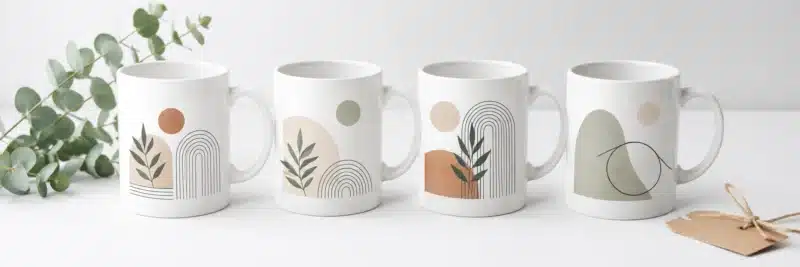
Mugs are the classic entry point for print on demand, and for good reason. The base cost is low, the margin is solid, and the gifting angle is enormous. People buy mugs for birthdays, Christmas, Mother’s Day, Father’s Day, new jobs, retirements, and just because something made them laugh.
The designs that sell best aren’t generic. “But First, Coffee” stopped working years ago. What works now is specificity: a mug designed for an elementary school teacher who loves true crime, or a dachshund owner, or a night shift nurse. The more it feels like it was made for one specific person, the more likely that person, and everyone who knows them, is to buy it.
Margin on mugs is strong on Printify, particularly with a US-based supplier if you’re targeting US customers. A mug that costs $9-11 to produce and ship can comfortably sell for $20-26 on Etsy.
Practical tip: Gift-focused designs, ones that work as presents, not just self-purchases, consistently outsell generic ones. Think about the buyer as well as the end user.
2. T-Shirts
T-shirts are the most competitive category in print on demand. They’re also the biggest market. Both things are true simultaneously, which is why your approach matters more here than anywhere else.
Generic slogans don’t sell. Gym motivation quotes, basic inspirational phrases, anything you’ve seen a hundred times before, these aren’t the designs to build a shop around. What works is designs that speak to a specific community in a way that feels like an inside reference. The kind of thing someone sees and thinks: I need that, and I need to send it to three people I know.
The opportunity is in communities that are underserved on Etsy, passionate, identifiable groups of people who don’t yet have a shop speaking directly to them.
Practical tip: Before designing anything, search your niche on Etsy and filter by bestseller. If the top results have thousands of sales, the niche is competitive. If they have a few hundred, there’s room to get in.
3. Tote Bags
Tote bags have strong margins, a broad audience, and a gifting angle that’s grown a lot, particularly with buyers looking for something more considered than a plastic bag but less expensive than a luxury item.
One of the most useful things about tote bags is how well designs transfer from other products. A design you create for a mug will often work directly on a tote bag without modification. That means double the listings with minimal extra work, same design, different product, different surface area for being found.
Text-heavy designs perform particularly well here. A clean typographic design with a niche-specific phrase or identity statement tends to catch the eye in Etsy search results and on Pinterest.
Practical tip: List the mug and the tote bag version of every design you create. Two listings, one design, twice the chance of being found.
4. Hoodies and Sweatshirts
The base cost on hoodies is higher than t-shirts, but the selling price is higher too, and the margins can be comparable or better. A hoodie that costs $24-30 to produce can comfortably sell for $50-65 on Etsy, particularly in gift-adjacent niches.
Seasonal demand is a big factor. Fall and winter consistently bring a spike in hoodie sales, which means getting your designs listed in August and September gives the algorithm time to index them before the rush arrives.
Practical tip: Unisex sizing and neutral colorways, black, gray, navy, cream, outsell fashion-forward cuts for most niches. People buying niche-themed hoodies care more about the design than the silhouette.
5. Phone Cases
Phone cases have a lower unit price than most other POD products, but the base cost is also low, which means the margins are solid. People replace them regularly, buy them for themselves, and buy them as gifts, the volume potential is real.
Designs transfer easily from other products. A graphic that works on a mug will often adapt to a phone case with minimal effort. The main practical consideration is listing for the most popular phone models in your target market.
Practical tip: Focus on current iPhone models and the most recent Samsung Galaxy range to start. Listing for every available model is tempting but not necessary, begin where the demand is highest and expand from there.
6. Notebooks and Journals
Journals and notebooks are a growing category on Etsy and one of the more underserved in print on demand. The gifting angle is strong, new year, back to school, birthdays, and “I saw this and thought of you” all apply. And the design lives entirely on the cover, which keeps the creation process simple.
Text-based and illustrated cover designs work well here, and both are straightforward to put together in Canva without any advanced design skills. A clean, niche-specific cover with the right listing keywords can find its audience on Etsy relatively quickly.
Practical tip: Specify the interior clearly in your listing, lined, dot grid, or blank. Buyers care about this more than you’d expect, and a vague listing leads to avoidable negative reviews.
7. Candles
Candles punch above their weight in print on demand. The perceived value is high, the gift positioning is strong, and the category is much less saturated than apparel on most platforms. The design lives on the label, one of the simpler design jobs in the POD space, and the base cost is reasonable relative to what buyers will pay.
Seasonal and occasion-based listings perform particularly well. A candle designed as a Christmas gift, a birthday present, or a Mother’s Day treat, with the right listing copy and a strong mockup, can achieve consistent sales with less competition than mugs or t-shirts.
Practical tip: Check what scents your Printify supplier offers and include them in your listing description. Buyers search for scent as well as design, it’s a small detail that improves discoverability.
8. Prints and Wall Art

Wall art is one of the highest-margin categories in print on demand, and it has none of the sizing complications that come with apparel. No returns because someone ordered the wrong size. No complaints about fit. A flat product that ships cleanly and looks great on a wall.
Base costs on prints are low. A quality art print that costs $5-8 to produce can sell for $20-35 on Etsy. Selling as a coordinated set of two or three prints pushes the average order value higher still.
Pinterest is a particularly strong traffic source for wall art, people save home décor inspiration constantly, and a well-designed pin of your print in a styled room can drive consistent traffic for months.
Practical tip: Sell coordinating sets rather than individual prints wherever possible. A set of three matching prints at $45 is a more compelling offer than three individual prints at $20 each, and the production cost is barely higher.
9. Tumblers and Water Bottles
Tumblers are a fast-growing category with strong gifting appeal, particularly in fitness, outdoor, and identity-based niches. The base cost is higher than mugs, but the selling price is higher too, and buyers in this category are comfortable paying for something that feels quality.
Personalization performs particularly well here. Name-based designs, occupation-specific graphics, and hobby-themed tumblers all tap into the “this was made for me” feeling that drives gift purchases on Etsy.
Practical tip: Insulated tumblers with lids, the Stanley-style format, are currently outperforming basic water bottles in most niches. Check what’s available on Printify and prioritize the formats with the strongest recent reviews.
10. Ornaments and Seasonal Products
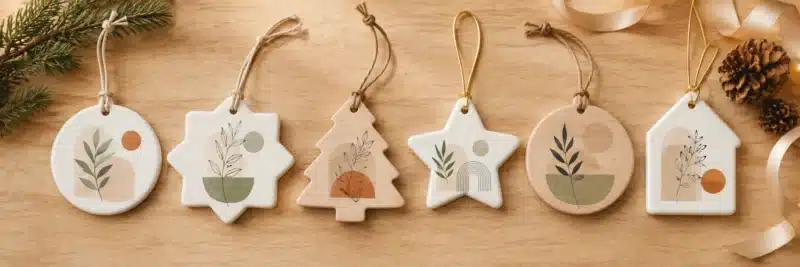
Last on the list but far from the least important. Seasonal and occasion-based products represent some of the biggest sales spikes on Etsy, and compared to evergreen categories like t-shirts, the competition is far more manageable for a new shop.
Christmas ornaments in particular have enormous demand and a clear gifting angle. A personalized ornament, for a family, a dog breed, a profession, a shared joke, hits every trigger that makes something sell on Etsy: it’s specific, it’s giftable, and it’s time-sensitive enough that buyers don’t procrastinate.
This is the core of the strategy taught in the Gifting Gold free workshop from Gold City Ventures. Emily, the coach behind it, reports over $800,000 in Etsy sales across her two shops, mostly from print on demand, and giftable seasonal products are a big part of that. Those are her own figures, not a typical result, but the workshop is free and worth an hour of your time before you decide what to focus on.
Practical tip: Start building seasonal products 8-10 weeks before the occasion. A Christmas ornament listed in late October is already behind. Aim for mid-to-late October for Christmas, early December for Valentine’s Day, and early March for Mother’s Day.
The Niche Is More Important Than the Product
Here’s what the list above can’t tell you on its own: the product matters less than who you’re designing for.
Two shops can both sell mugs. One targets “dog lovers” broadly. The other targets “dachshund owners who work from home.” The second shop will almost certainly outsell the first, not because mugs are a better product, but because the designs speak directly to a specific person who feels seen by them.
Every product on this list can work well or badly depending on how clearly you’ve defined your audience. The niche is the strategy. The product is just the vehicle.
If you’re still working out how to choose yours, the print on demand side hustle guide covers the whole process, including how to think about niches before you list your first product.
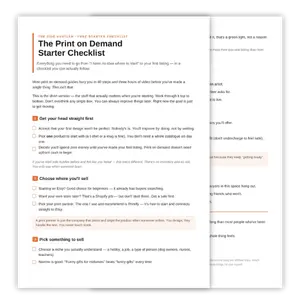
Download Your Free Print on Demand Starter Checklist
The two-page checklist that takes you from ‘no idea where to start’ to your first live listing — yours the second you sign up.
How to Make Your Products Look Professional from Day One
Two things separate listings that convert from listings that don’t: the design and the mockup.
For designs, Canva is where most beginners start, and the free version is enough for text-based and illustrated designs across most of the categories above. You don’t need advanced skills. You need good judgment about what looks right on a product.
For mockups, Placeit generates lifestyle images from your design file, your mug on a kitchen counter, your t-shirt being worn, your tote bag over someone’s shoulder. That kind of real-world context makes a real difference to how professional your listings look and how likely someone is to buy.
For a more detailed walkthrough on the design side, the Canva for print on demand post covers it properly.
Where to Sell Your Print on Demand Products
For most beginners: Etsy. It has built-in search traffic, a proven buyer audience for exactly the kind of products on this list, and a lower barrier to entry than building your own store from scratch.
Once you’ve got sales coming in and you understand what’s working, a Shopify store gives you more control and better long-term margins. But that’s a second step, not a first one.
Whichever route you go, Printify connects to both cleanly, and it’s free to start. If you’re still weighing up which POD platform to use, the Printify vs Printful comparison will help you make the call.
Ready to Pick Your First Product?
You’ve got ten solid options and a filter for evaluating anything beyond this list. The next step is simple: pick one product, pick one niche, and get your first design live.
Set up your free Printify account, browse the catalog for the product you’ve chosen, and start there. Everything else follows from having something listed.