
Table of Contents

This post contains affiliate links. If you click through and buy something, I may earn a small commission — at no extra cost to you. I only recommend tools I’ve actually used or thoroughly researched.
A print on demand side hustle is one of those that sounds almost too good to be true. Design a product, list it for sale, and when someone buys it — a supplier prints it, packs it, and ships it straight to the customer. You never touch the stock. You never rent a warehouse. You never stay up until midnight wrapping parcels.
That part is real. But so is the work involved in getting there. This isn’t a passive income tap you turn on and forget about — at least not at the start. What it is, though, is one of the most accessible ways to start selling physical products online without needing a lot of money or a lot of experience.
Here’s exactly how it works, what you need to get started, and the mistakes worth avoiding before you spend a single hour on it.
What Is Print on Demand and How Does It Actually Work?
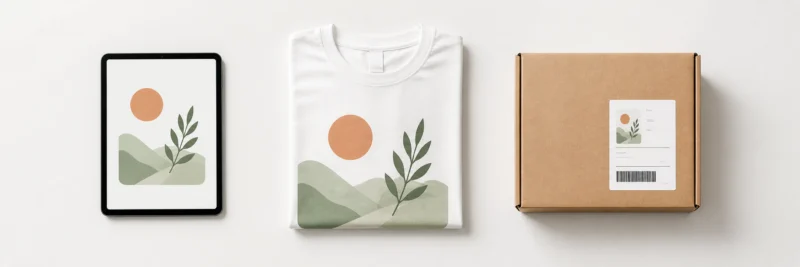
Print on demand is a fulfilment model. You create designs, apply them to products, and list those products for sale in an online shop. When a customer buys something, your print on demand supplier prints the design onto the product and ships it directly to the customer. You never hold any stock.
The money works like this: say you design a mug and list it for £18. Your supplier charges £8 to produce and ship it. You keep £10. That margin is yours — no upfront investment, no minimum order quantities, no boxes of unsold mugs cluttering up your spare room.
The products you can sell this way range from t-shirts and hoodies to mugs, phone cases, tote bags, wall art, cushions, and more. If a supplier can print on it, you can sell it.
The Difference Between Print on Demand and Dropshipping
People sometimes use these terms interchangeably. They’re not the same thing.
Dropshipping usually means reselling existing products from a supplier — you’re not adding anything to them. Print on demand means your design is applied to the product before it ships. You’re creating something, even if that something is a graphic on a t-shirt.
That distinction matters because your designs are what set you apart. Anyone can list a plain white mug. Not everyone can design one that a specific type of customer actually wants to buy.
Make Money With Print-On-Demand Free Workshop
Want to learn how to make money selling print-on-demand products on Etsy? Check out this free workshop and learn how Emily made $500,000 in just two years.

Is Print on Demand Worth It in 2026?
Honestly? Yes — with realistic expectations.
The case for it is straightforward. You can start for free. There’s no inventory risk. Once your products are listed, the fulfilment side runs without you. And the barrier to entry is low enough that you don’t need a business background, a design degree, or a big budget to give it a proper go.
But here’s what the enthusiastic YouTube videos tend to skip over: the margins on individual products aren’t huge. Competition on platforms like Etsy has increased significantly in the last few years. And a shop full of generic designs with no clear audience isn’t going to sell itself.
The people making real money from print on demand treat it like a business. They pick a niche, create designs that speak to a specific group of people, and stay consistent about it. They’re not listing 200 random products and hoping something sticks.
Do that — even part-time — and print on demand is absolutely worth your time. Go in expecting easy money with no effort and you’ll be disappointed inside a month.
What You Can Sell with Print on Demand
The product range has expanded a lot over the last few years. You’re no longer limited to t-shirts and mugs — though both still sell well.
The main categories worth knowing about:
- Apparel — t-shirts, hoodies, sweatshirts, vests, kids’ clothing
- Home and living — mugs, cushions, blankets, candles, framed prints
- Stationery and paper goods — notebooks, greeting cards, calendars
- Accessories — tote bags, phone cases, hats, socks
- Wall art — prints, canvas wraps, posters
Some of these have better margins than others. Some sell more consistently. If you want a proper breakdown of what’s actually worth listing as a beginner, I’ve covered it in the best print on demand products to sell post — worth reading before you commit to a product direction.
How to Choose the Right Print on Demand Platform

This is the decision most beginners overthink. There are dozens of platforms out there, and the differences between them matter less than just picking one and starting.
That said, here’s what you should actually be looking at: product range, print quality, shipping times, and integrations. Does it stock what you want to sell? Are the reviews consistently good? Does it connect to Etsy or Shopify without a headache?
If you’re just starting out, the platform I’d point you towards is Printify. It’s free to start, has one of the widest product catalogues available, and connects directly to Etsy and Shopify without any friction. The supplier network is large, which means you can usually find someone printing close to your customers — which keeps shipping times down.
The main alternative worth knowing about is Printful. Print quality is excellent and the branding options are strong, but the base costs are slightly higher, which squeezes your margins. Better suited once you’re established and prioritising quality over cost.
Printify vs Printful — Which One Should Beginners Start With?
For most people starting from scratch: Printify. Lower base costs, more product options, and the free plan does everything you need to get going.
Once you’ve made your first sales and you understand your margins, you can always reassess. If you want the full side-by-side, I’ve done a proper Printify vs Printful comparison covering costs, quality, shipping, and which one suits different situations.
How to Start a Print on Demand Business: Step by Step
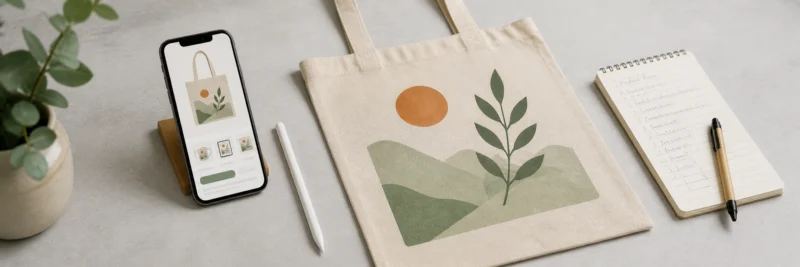
Here’s the actual process — no padding, just the steps.
Step 1 — Choose Your Niche
This is the step most beginners skip, and it’s the one that matters most.
A niche isn’t just a product category. It’s a specific group of people with a shared identity, interest, or sense of humour — and designs that speak directly to them. Dog owners who love dachshunds. Teachers who are also into true crime. Runners who also happen to be introverts.
The more specific you get, the less competition you face. And the more likely someone is to see your product and think — that is literally made for me.
Step 2 — Set Up Your Printify Account
Go to Printify and create a free account. It takes about three minutes.
Once you’re in, connect Printify to your sales channel — Etsy or a Shopify store. The integration is straightforward and Printify walks you through it. You don’t need to put a card down to browse products and start building your catalogue.
The free plan is enough to get going. You only pay the base cost when a customer places an order — so there’s no financial risk in the setup phase.
Step 3 — Create Your Designs
You don’t need to be a graphic designer. Seriously.
Most beginners use Canva — the free version covers everything you need for text-based and illustrated designs. What matters more than technical skill is judgement. Does this look good on a product? Would the person you’re designing for actually buy this? Is the text readable at small sizes?
Once your design is ready, you’ll want mockup images that show the product in a real setting. Placeit is good for this — it generates lifestyle mockups from your design file, which makes listings look professional without needing a photoshoot.
For a more detailed walkthrough of the design side, the Canva for print on demand post covers it properly.
Step 4 — Choose Your Sales Channel
Two main options: Etsy or your own store.
Etsy is the easier starting point. People are already on there searching for products to buy — you’re not starting from zero on discoverability. The trade-off is fees and the fact that you’re building on someone else’s platform.
A Shopify store gives you more control and better long-term margins, but you’re responsible for driving all your own traffic. That’s a bigger ask when you’re just starting out.
Honest steer: start with Etsy. Get some sales, learn what’s working, then think about expanding once you’ve got momentum. The print on demand on Etsy guide covers the full setup.
Step 5 — List Your First Product
A good listing has three things: a title that matches how people actually search, a description that speaks to the customer, and strong mockup images that show the product in context.
Most beginners spend too long on the design and not enough on the listing. The listing is what converts a browser into a buyer.
Keep your title specific. “Funny Dachshund Mug — Gift for Sausage Dog Lovers” will outperform “Cute Dog Mug” every time — because it matches what someone is actually typing into the search bar.
Step 6 — Drive Traffic to Your Products
Listing products and waiting is not a strategy.
Etsy’s internal search will send some traffic your way if your listings are optimised — but you’ll grow faster by pushing traffic from outside too. Pinterest is the highest-leverage channel for most POD sellers, particularly for visual products like home goods, apparel, and wall art.
I’ve covered Pinterest marketing in depth in this post — and while it’s written around printables, the traffic strategies translate directly to POD products.
Step 7 — Track What’s Working and Double Down
After a few weeks, patterns emerge. Some products get views but no sales — usually a listing or pricing issue. Some get sales but thin margins — worth reviewing your base costs.
The products selling well are the ones to build on. More designs in that style, for that audience, in that category. That’s how a side hustle becomes a reliable income stream.
If you want a more structured starting point before you dive in, Gold City Ventures run a free print on demand workshop that’s well worth an hour of your time. The coach behind it — Emily — has built over $800k in Etsy POD sales and walks through exactly what sells, how to set up on Etsy, and the giftable product strategy that drives most of her income. You can watch the free Gifting Gold workshop here. No catch — it’s genuinely free, and it’s one of the better beginner resources out there.
How Much Can You Make with Print on Demand?

Let’s be straight about this — the numbers thrown around online vary wildly and most of them aren’t helpful.
In the first few months, most people make very little. That’s normal. You’re still finding your niche, testing designs, and learning what your audience responds to. Expecting consistent income before you’ve got that dialled in is setting yourself up for disappointment.
Once you’ve got a shop with 30–50 well-targeted products and some momentum behind it, £200–£800 a month is a realistic range for part-time effort. Some people scale beyond that — but they’re treating it as a proper business, not something they check in on occasionally.
The income potential is real. It just doesn’t arrive on a schedule, and it doesn’t arrive without the work.
For a more detailed look at what’s actually achievable, the print on demand profits post breaks down income ranges and what separates the shops that make money from the ones that don’t.
Common Print on Demand Mistakes to Avoid
A few things that trip up almost every beginner — worth knowing before you start.
No clear niche. A shop selling funny dog mugs, motivational gym t-shirts, and kids’ birthday banners is confusing to the algorithm and confusing to customers. Pick a lane and stay in it.
Poor mockup quality. A flat design on a white background doesn’t sell products. Use lifestyle mockups that show the item in a real setting — on a desk, being worn, in a kitchen. It makes a bigger difference to conversion than most people expect.
Ignoring listing SEO. Etsy’s search algorithm works similarly to Google’s. The words in your title, tags, and description matter. If nobody can find your listing, it doesn’t matter how good the design is.
Giving up too early. Most shops see very little in the first 60–90 days. That’s not failure — that’s the algorithm learning who to show your products to. Consistency in the early months pays off later.
Ready to Start?
You’ve got everything you need to understand how print on demand works and what it takes to do it properly.
The next step is straightforward: set up your free Printify account, pick one product, create one design, and get your first listing live. Everything else comes from learning as you go.
Still deciding between platforms? The Printify vs Printful comparison will help you make the call. And if you’re going the Etsy route — which I’d recommend for most beginners — the print on demand on Etsy guide covers everything from shop setup to your first sale.
Start small. Start this week. The first listing is always the hardest part.
Make Money With Print-On-Demand Free Workshop
Want to learn how to make money selling print-on-demand products on Etsy? Check out this free workshop and learn how Emily made $500,000 in just two years.
