
Table of Contents

This post contains affiliate links. If you click through and buy something, I may earn a small commission, at no extra cost to you. I only recommend tools I’ve actually used or thoroughly researched.
Starting an Etsy printables shop has been on my list for a while, and I’ve finally started doing it. I’ve had an Etsy shop for a couple of years, but I’ve only recently begun building out the printables side of it properly, so I’m essentially doing this part from scratch right now. This post is the exact plan I’m working through, my real Etsy printables shop plan, not a theoretical one.
I’ll be straight with you about where I am, because I don’t want this to read like a highlight reel. I’ve made a couple of sales, nothing substantial yet, and I started promoting the shop on Pinterest about a week ago. I’m already seeing slightly more traffic land on those listings, though it’s too early to call it a trend. So this isn’t a “look at my results” post. It’s a “here’s the real plan I’m following, step by step” post, updated as I actually go through it.
As the numbers become more meaningful, I’ll keep updating this section, good or bad. For now, a couple of sales and early Pinterest traffic is a real start, not a result worth bragging about, but proof the plan is at least moving in the right direction.
Recommended reading: If you want the broader overview of selling printables as a business, start with How to Sell Printables Online.
Why I’m Starting an Etsy Printables Shop
I’ve been running this blog for a couple of years, and one thing I keep coming back to is the appeal of products you create once and sell repeatedly. That’s the core of the printables model: you design a file, list it, and it can sell hundreds or thousands of times with no additional work per sale.
The blog is still my priority and where I focus my best energy, so I’m building the printables side in focused windows rather than all at once. That keeps me from dropping the ball on either one.
I’ve also helped my daughter sell on Etsy, so I know how the platform works from the inside, the listing process, the fees, how buyers find products. What I hadn’t done until recently was build out my own printables shop. That’s what I’m doing now.
The numbers I’ve seen from other sellers are encouraging. Not the “I made $10,000 in my first month” stories (those exist, but they’re outliers), the more realistic ones, where people build a steady side income over six to twelve months of consistent effort. That’s the kind of result worth committing to, and it doesn’t require trading hours for dollars.
Free Training: Earn Money Selling Digital Printables
Not sure what to create or where to start? Gold City Ventures’ free workshop walks you through what sells, how to design it, and how to get your first sale
Step 1: I’d Pick One Specific Niche

Not “planners.” Not “wall art.” One specific corner of one specific category.
The shops I’ve studied that grow fastest are the ones with a tight focus. Instead of selling a random mix of budget trackers, birthday invitations, and motivational quotes, they pick one lane and go deep. A shop that only sells wedding planning printables. A shop focused entirely on ADHD organizational tools. A shop that does nothing but minimalist wall art.
Why does this work? Because Etsy’s algorithm rewards shops that signal expertise in a category. When all your listings are related, buyers who find one product are more likely to browse your shop, favorite multiple items, and come back. And Etsy notices that engagement.
I’d spend at least a full day on research before creating anything. I’d go to Etsy, search broad terms in categories I’m interested in, and look at the top-selling shops. I’d pay attention to how many sales they have, what their reviews say, and what gaps I can spot. Then I’d pick a niche I can create at least 20–30 products for.
Not sure what niche to go into? Read Best Printables to Sell for Beginners before you commit to anything.
Step 2: I’d Invest in the Right Training First
I know I could figure this out on my own. But I’d rather not spend three months making avoidable mistakes when someone has already mapped out the process.
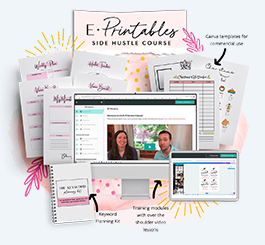
The course I’d take is the Gold City Ventures E-Printables Course. I’ve reviewed it in detail, it covers niche research, creating products in Canva, setting up your Etsy shop, and writing listings that rank. If you’re serious about how to start selling printables on Etsy, it’s worth the investment before you spend weeks going in the wrong direction. Read my full Gold City Ventures review to see exactly what’s inside.
Beyond the course, the only other tool I’d need on day one is a free Canva account. That’s it. Canva Pro is around $15/month and I’d probably upgrade after the first month for the extra features, but it’s not essential to start.
Step 3: I’d Research Before I Create
This is the step most people skip entirely, and it’s the reason most new Etsy shops don’t make sales in the first 90 days.
Research means confirming that people are actively buying in your chosen niche before you design a single product. Not just searching. Buying. There’s a difference, and it matters.
The manual version of this is spending a few hours on Etsy studying the top listings in your niche, looking at sales counts, reading reviews, noting what’s missing. It works. But it’s slow, and it relies on reading surface signals rather than seeing the data underneath.
I’d use Profittree to do this properly. It’s an Etsy product research tool that shows you demand signals from real Etsy activity (estimated views, add-to-carts, and sales) so you can gauge whether a niche actually has buyers. You can search a product category, see what’s moving, and pressure-test your niche idea with data rather than instinct. Treat the numbers as a strong guide, not gospel, but they’ll tell you far more than guessing will.
The free plan includes access to the Product Finder with last week’s data, which is enough to make a solid decision at this stage. I’d run every product idea through it before opening Canva. If the data backs the idea, I create. If it doesn’t, I move on, and I haven’t wasted a week on something nobody’s buying. Want to know exactly how it works and whether a paid plan is worth it? Read my full Profittree review. Or try it free here and run your niche through the Product Finder right now.
Not sure what niche to go into yet? Read Best Printables to Sell for Beginners before you start researching, it’ll give you a shortlist of categories worth investigating.
Step 4: I’d Create My First 10 Listings in Two Weeks
Not one. Not fifty. Ten solid listings in my first two weeks.
Here’s my thinking. One listing isn’t enough for Etsy’s algorithm to take your shop seriously. But trying to create fifty products before launching is a recipe for burnout and perfectionism. Ten gives you enough variety for buyers to browse, enough data to start learning what works, and enough momentum to keep going.
I’d start with my strongest product idea, the one my research tells me has the clearest demand, and create 2–3 variations of it. A monthly version and a weekly version. A minimalist style and a colorful one. Then I’d branch into 2–3 related products in the same niche.
For example, if my niche were personal finance printables, my first 10 might include a monthly budget planner (in two color styles), a weekly spending tracker, a savings goal worksheet, a debt payoff tracker, a no-spend challenge calendar, a bill payment checklist, a sinking funds tracker, and a financial goals worksheet. All related. All clearly from the same shop.
If you’re not sure how to create the files, How to Make Printables to Sell covers the full design process.
Step 5: I’d Set Up My Etsy Printables Shop Properly From Day One
I’ve seen too many shops that look like an afterthought, no About section, no shop policies, a random shop name that doesn’t connect to anything. Here’s what I’d get right to start an Etsy shop for digital products that actually looks like a real business:
Shop name: Short, memorable, and relevant to my niche. I wouldn’t spend a week agonizing over it, you can change it later, but I’d at least make sure it sounds like a real business, not a throwaway project.
About section: I’d write this like a human being, not a corporation. Who I am, what I sell, and why I care about it. Etsy rewards shops that feel personal and trustworthy, and buyers are more likely to purchase from someone they feel a connection with.
Shop policies: Clear and upfront. For digital products, I’d state that I don’t accept returns (standard for digital downloads) and explain what the buyer gets when they purchase.
Branding: Consistent colors, a clean shop banner, and product images that all look like they belong together. This doesn’t have to be fancy, just intentional.
Recommended reading: How to Sell Printables on Etsy, the full step-by-step for setting up your shop and creating listings that get found.
Step 6: I’d Price With Confidence
I wouldn’t race to the bottom. Undercutting everyone on price signals low quality to buyers and tanks your margins for no good reason.
Most printables sell in the $4–$12 range. I’d price mine at the mid-to-upper end of whatever my competitors are charging, and I’d focus on making my listing images and descriptions look better than theirs. A well-presented product at $8 outsells a sloppy one at $3 every single time.
I’d also create at least one bundle, three or four related products packaged together at a slightly discounted total price. Bundles increase your average order value and give buyers a reason to spend more in your shop. This is exactly the kind of thing that makes sense once you sell printables as a beginner and start seeing which products people actually want more of.
Recommended reading: How to Price Printables on Etsy, a pricing approach that holds up in a competitive niche.
Step 7: I’d Drive Traffic With Pinterest

This is the part where I’ve got a real advantage, because I’ve been driving traffic with Pinterest for a couple of years and I know how it works. Promotion is the next phase for my shop, products first, traffic second, and Pinterest is where I’ll start.
Pinterest is a visual search engine, and printables are one of the most popular categories on the platform. A well-designed pin linking to an Etsy listing can drive consistent traffic for months, sometimes years, without much additional effort.
My plan is to create 2–3 pins for each Etsy listing and post them to relevant boards as soon as the listings are live. I wouldn’t wait until I had “enough” products or until the shop was “perfect.” Traffic from Pinterest takes time to build, so the sooner you start, the sooner the momentum kicks in.
Recommended reading: How to Market Printables on Pinterest, the full strategy for bridging your Etsy shop and Pinterest.
Step 8: I’d Track Everything for 90 Days
Here’s what I’d pay attention to in the first three months:
Views per listing: which products are getting seen? If some listings are getting zero views, the titles or tags probably need work.
Conversion rate: are people who see your listings buying? If views are high but sales are low, the images, price, or description might need adjusting.
Traffic sources: where are buyers coming from? Etsy search, Pinterest, direct links? This tells you where to focus your marketing energy.
Which products sell and which don’t: this is the most important data point. Double down on what works. Create variations of your best sellers. And don’t be afraid to delete or rework listings that aren’t performing.
Etsy’s new Search Visibility Dashboard (launched in early 2026) now tells you exactly which listings have reduced visibility and why. I’d check that weekly and act on what it tells me.
After 90 days, I’d have enough data to know whether my niche is working, what my audience wants, and where to focus next. That’s when the real scaling starts.
Free Training: Earn Money Selling Digital Printables
Not sure what to create or where to start? Gold City Ventures’ free workshop walks you through what sells, how to design it, and how to get your first sale
The Honest Bottom Line
I don’t have big results to share yet, just a couple of sales and Pinterest traffic that’s just starting to build after about a week of promoting. When there’s more to report, it’ll go right here, good or bad.
What I do have is a plan built on solid research, real data from successful sellers, and a genuine understanding of how Etsy and Pinterest work. I’ve seen enough to believe this business model works for people who show up consistently, create useful products, and don’t quit after two weeks.
One thing already on my list for when the sales pick up: Etsy Seller Taxes: What You Actually Owe covers what to set aside and which fees and expenses are deductible, and since printables are technically digital products, Digital Product Seller Taxes fills in the specifics on 1099s and platform fees that apply here too. Worth reading before real income arrives, not after.
If you’re in the same position I am, you’ve been thinking about this for a while and you just need to start, then stop researching and start doing. Watch the Gold City Ventures free workshop, open Canva, and create your first product this week.
When you’re ready to open your shop, follow the step-by-step process in How to Sell Printables on Etsy.
I’ll be right there with you.