
Table of Contents

This post contains affiliate links. If you click through and buy something, I may earn a small commission — at no extra cost to you. I only recommend tools I’ve actually used or thoroughly researched.
If you’re figuring out how to sell printables online, you’re looking at one of the simplest ways to start earning money on the internet, and one of the few side hustles where you can create something once and get paid for it over and over again.
If you already know you want to sell on Etsy specifically, jump straight to How to Sell Printables on Etsy, it covers the Etsy setup process in detail. This post is the wider picture: what the business model looks like, where you can sell, and how to decide what’s right for you.
I’m not going to pretend I’ve made thousands selling printables myself. I haven’t. Not yet. But I’ve spent months researching this business model, and I’m building out my own Etsy printables shop right now. What I can tell you is that the people doing this well aren’t design geniuses or marketing experts. They’re regular people who learned a handful of key things, took action, and kept going.
In this post, I’ll walk you through everything you need to know to sell printables online, what they are, where to sell them, how to create them, and how to make sales. No fluff. Just a clear path you can follow.
What Are Printables (And Why Do They Sell So Well)?
Printables are digital files, usually PDFs or PNGs, that people buy, download, and either print at home or use on a device. Think planners, wall art, budget trackers, checklists, wedding invitations, kids’ worksheets, and greeting cards.
The reason they sell so well is simple: you make the file once and sell it an unlimited number of times. There’s no inventory. No shipping. No packaging. A customer buys it, Etsy (or whatever platform you use) delivers the file automatically, and you don’t have to lift a finger.
That’s not to say it’s effortless. You still need to create something people want, list it properly, and get it in front of buyers. But the economics are strong. Your profit margins sit around 90% or higher because your only real costs are the platform fees and maybe a Canva subscription.
And this isn’t a tiny niche. Cody Berman, who co-founded the printables course Gold City Ventures, documented building a brand-new Etsy shop to over $4,000 a month selling digital products, making around $6,000 in its first four months, and Gold City says its students have collectively earned over $3.3 million on Etsy. Those are their own reported figures, not typical results, but they show the ceiling is real. Most sellers earn far more modestly, especially early on.
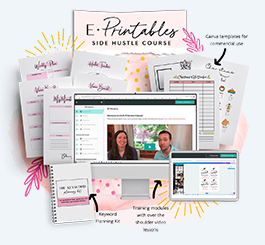
Free Training: Earn Money Selling Digital Printables
Not sure what to create or where to start? Gold City Ventures’ free workshop walks you through what sells, how to design it, and how to get your first sale
Where Should You Sell Printables?

You’ve got options, but for most beginners, the answer is Etsy.
Etsy is where the buyers already are. You don’t have to build an audience from scratch, people come to Etsy specifically looking for printables, planners, and digital downloads. It’s a search engine for handmade and digital products, and that built-in traffic is a huge advantage when you’re starting out.
Other platforms worth knowing about include Shopify (if you want your own standalone store), Teachers Pay Teachers (if you’re making educational resources), and your own website. But Etsy is the place to start because the learning curve is the shortest and the traffic is already there.
For most beginners, Etsy is the right starting point, the built-in traffic removes the hardest early obstacle. Read the full breakdown in How to Sell Printables on Etsy.
The fees are worth understanding upfront. According to Etsy’s official fees policy, the platform charges $0.20 per listing, a 6.5% transaction fee on the total sale (including shipping), and a payment processing fee of around 3% + $0.25 per transaction. On a $10 printable, that works out to roughly $1.40 in total fees. That’s still a very healthy margin for a product with zero production costs.
How to Sell Printables Online: Step by Step
Step 1: Pick a Niche People Are Already Buying
This is the step most beginners skip, and the reason most shops fail.
Don’t start by creating whatever you think looks cool. Start by researching what people are already searching for and buying. Go to Etsy, type in broad terms like “printable planner” or “budget tracker printable,” and study the top results. How many sales do the top shops have? What are the reviews saying? What’s missing from the listings you see?
The sellers who do well tend to go specific. “Planner” has over a million results on Etsy. “ADHD weekly planner printable” has far fewer, and the people searching for it know exactly what they want.
Recommended reading: Best Printables to Sell for Beginners, where I break down the categories that are selling right now and why they work.
Some of the strongest printable niches in 2026 include planners and organizational tools, budget and savings trackers, wedding and party printables, wall art, kids’ educational worksheets, and small business templates like invoices and social media planners.
Recommended reading: Printables to Sell on Etsy: 10 specific ideas with data on what’s moving.
Step 2: Create Your Printable
You don’t need to be a graphic designer. Seriously.
The tool most printable sellers use is Canva, it’s free (with a Pro option), drag-and-drop, and has hundreds of templates you can customize. You can create a professional-looking planner or piece of wall art in an afternoon, even if you’ve never designed anything before.
Recommended reading: How to Make Printables in Canva: a full step-by-step walkthrough for complete beginners.
Here are the basics to keep in mind when designing:
- Size: US Letter (8.5 x 11 inches) is the standard for most printables. Use A4 if you’re targeting international buyers.
- Fonts: Stick to two, one for headings, one for body text. Keep them clean and readable.
- Colors: Pick 3-4 colors and stay consistent across your products. It builds a recognizable brand.
- File format: Export as PDF for most printables. PNG works well for wall art.
The key is usefulness over beauty. A simple, well-organized budget tracker that helps someone manage their money will outsell a gorgeous one that’s confusing to use. Every time.
Recommended reading: How to Make Printables to Sell: covers the full creation process from idea to finished product.
If you want a structured course that walks you through all of this, from finding your niche to designing in Canva to setting up your shop, the Gold City Ventures E-Printables Course is the one I’d point you to. It’s built specifically for beginners with no design experience, and it includes 30+ done-for-you Canva templates to get you started fast. Gold City says its students have collectively made over $3.3 million in sales, their figure, which at least shows the model works for people who put the work in.
Recommended reading: Gold City Ventures Review: my full breakdown of what’s inside the course and who it’s for.
Step 3: Set Up Your Etsy Shop
Setting up an Etsy shop takes about 20 minutes. You’ll need to choose a shop name, set your payment and billing preferences, and create your first listing. If you’re opening a brand-new shop, Etsy now also charges a one-time setup fee and runs a quick ID check (more on the cost of that below).
A few things that matter more than people realize:
- Shop name: Keep it short, memorable, and relevant to your niche. You can change it later, so don’t overthink it.
- Shop description and About section: Write like a human. Tell people what you sell and why you care about it. Etsy rewards shops that feel personal and trustworthy.
- Shop policies: For digital products, you typically don’t accept returns, but spell it out clearly so buyers know what to expect.
The biggest mistake new sellers make is spending weeks perfecting their shop before listing a single product. Get your first listing up. You can polish everything else as you go.
Recommended reading: If I Were Starting an Etsy Printables Shop Today: my exact step-by-step plan for launching from scratch.
Step 4: Create Listings That Get Found
Your listing is everything. It’s how Etsy decides whether to show your printable to buyers, and it’s what convinces someone to click “Add to Cart.”
And this is where things have changed recently. In early 2026, Etsy rolled out major updates to its search algorithm. The old advice of cramming every possible keyword into your title? That’s officially dead. Etsy’s search now uses AI and semantic understanding, it reads your entire listing holistically (title, tags, description, photos, attributes, even reviews) to figure out what you’re selling and who it’s right for. Keyword stuffing doesn’t just stop working, it can hurt your ranking.
Here’s what matters now:
Title: Keep it short, clear, and human. Etsy now recommends titles under 15 words. Lead with what the product is, then add 2-3 key details. Something like “Monthly Budget Planner Printable: Undated, US Letter PDF” reads well and tells both the buyer and the algorithm exactly what it is. The old-style titles full of keyword soup (“Budget Planner Finance Tracker Money Organizer Printable PDF Download Gift For Her”) are being actively penalized.
Tags: Etsy gives you 13 tags per listing. Use all of them. This is where your keyword variety goes now, not crammed into the title. Use multi-word phrases that buyers search for. “Budget planner printable” is much better than just “budget.” Mix specific long-tail phrases with a few broader terms.
Description: This matters more than it used to because Etsy’s AI now reads descriptions for context. Explain exactly what the buyer gets. What’s included in the download? What size is it? How do they print it? Answer every question they might have before they have to ask. Write naturally, you’re helping both the buyer and the algorithm understand your product.
Images: This is where a lot of sellers leave money on the table. Show your printable in context, on a desk, in a frame, being used. Lifestyle mockups convert much better than flat screenshots. You can create these in Canva for free. Etsy’s image recognition now also evaluates photo quality as a ranking factor, so clear, well-lit images matter more than ever.
Attributes: Fill out every available attribute field. Etsy uses these as search filters, and skipping them means your listing won’t appear when buyers narrow their search. This is one of the most overlooked ranking signals.
Recommended reading: How to Price Printables on Etsy: getting the pricing right matters more than most people think.
Step 5: Drive Traffic to Your Listings
Etsy’s internal search is your primary traffic source, but it’s not the only one. The sellers who grow fastest are the ones who also bring their own traffic, and the best free channel for that is Pinterest.
Pinterest is basically a visual search engine, and printables are one of the most popular categories on the platform. A well-designed pin linking to your Etsy listing can drive consistent traffic for months.
Recommended reading: How to Market Printables on Pinterest: this is how you bridge the gap between creating a product and getting eyes on it.
You can also use social media, a blog, or an email list to drive traffic. But Pinterest is the one I’d start with because the effort-to-reward ratio is the best for this kind of product.
Step 6: Keep Going
Here’s the honest truth: most Etsy printable shops that fail don’t fail because of bad products. They fail because the seller listed three things, didn’t see instant results, and gave up.
The Etsy algorithm rewards shops that are active and have strong listings. More listings means more entry points in search, more chances for a buyer to find you, and more signals to Etsy that you’re a serious seller. But in 2026, quality matters more than quantity. Ten well-researched, properly crafted listings will outperform fifty rushed ones with weak images and stuffed titles. The algorithm now tracks engagement, clicks, favorites, and conversions, and uses those signals to decide how high to rank you.
So keep creating, but create with intention. Study what’s selling in your niche, pay attention to seasonal trends (holiday printables, back-to-school, New Year planners), and keep adding products. Aim for 20-30 solid listings in your first couple of months, then keep building. The sellers making real money from printables have shops with 50, 100, sometimes 200+ listings, but the ones at the top of search are the ones with strong engagement, not just high volume.
Recommended reading: How Much Can You Make Selling Printables?: an honest look at what’s realistic.
How Much Does It Cost to Start Selling Printables?
Very little. That’s one of the biggest appeals of this business model.
Here’s what you actually need to spend:
- Canva Free: $0. The free version is enough to get started. Canva Pro (around $15/month) is nice for extra features but not essential on day one.
- Etsy shop setup fee: if you’re opening a brand-new Etsy shop, there’s now a one-time setup fee, usually around $15 (it can run higher in some regions), plus a quick ID check. Shops opened before this rule came in don’t pay it.
- Etsy listing fees: $0.20 per listing. If you start with 10 listings, that’s $2.
- Etsy transaction fees: 6.5% per sale plus payment processing (roughly 3% + $0.25). These come out of your revenue, so there’s no upfront cost.
- Gold City Ventures E-Printables Course: $247 (sometimes less if you join through the free workshop or an open enrollment, though I’d budget for the full price). This isn’t required, but if you want a structured path and done-for-you templates, it’s the course I’d recommend. Their free workshop is a good way to test the waters first.
Realistically, you can start for around $15-$20 once you factor in the new-shop setup fee and a few listings, still one of the cheapest businesses you can start. You’re not risking hundreds or thousands before you know if it’s right for you.
Can You Really Make Money Selling Printables?

Yes. But I want to be straight with you about what “making money” looks like.
You’re probably not going to make $1,000 in your first month. A few people get fast starts, and Gold City highlights students who hit big milestones early, but that’s the exception, not the rule.
What’s more realistic is this: you build a small shop, start getting the occasional sale, and grow gradually as you add listings and learn what your audience wants. Some sellers turn that into a steady side income over several months; some go much further; plenty never get real traction. The difference is almost always consistency, the people who keep listing and improving are the ones who get somewhere.
What makes printables worth it is that the income can be fairly passive once it’s working. A listing that’s live and ranking in Etsy search can keep selling for months or years without you touching it. You’re building an asset, not trading time for money.
Recommended reading: How to Scale Your Printables Business: for when you’re ready to go beyond your first few sales.
Free Training: Earn Money Selling Digital Printables
Not sure what to create or where to start? Gold City Ventures’ free workshop walks you through what sells, how to design it, and how to get your first sale
What You Need to Get Started Today
If you’ve read this far, you already know more than most people who think about selling printables but never do it. The gap isn’t knowledge. It’s action.
Here’s what I’d do today if I were starting from zero:
- Watch the Gold City Ventures free workshop, it gives you a solid overview of what sells, what to charge, and how to get your first sale.
- Open a free Canva account and start browsing printable templates to see what’s possible.
- Spend 30 minutes on Etsy researching the niche you’re most interested in. Look at what’s selling and what the top shops are doing.
That’s it. You don’t need to have everything figured out. You just need to start.
Ready to go deeper? If Etsy is your platform of choice, How to Sell Printables on Etsy walks you through the setup step by step. If you’re not sure what to create yet, start with Best Printables to Sell for Beginners, it’ll help you pick your first product without overthinking it.
You’ve got this.
Recommended reading:
- How to Sell Printables on Etsy
- How to Make Printables to Sell
- How to Make Printables in Canva
- Best Printables to Sell for Beginners
- How to Price Printables on Etsy
- How to Market Printables on Pinterest
- How Much Can You Make Selling Printables?
- How to Scale Your Printables Business
- Gold City Ventures Review
- Digital Products That Sell Like Crazy